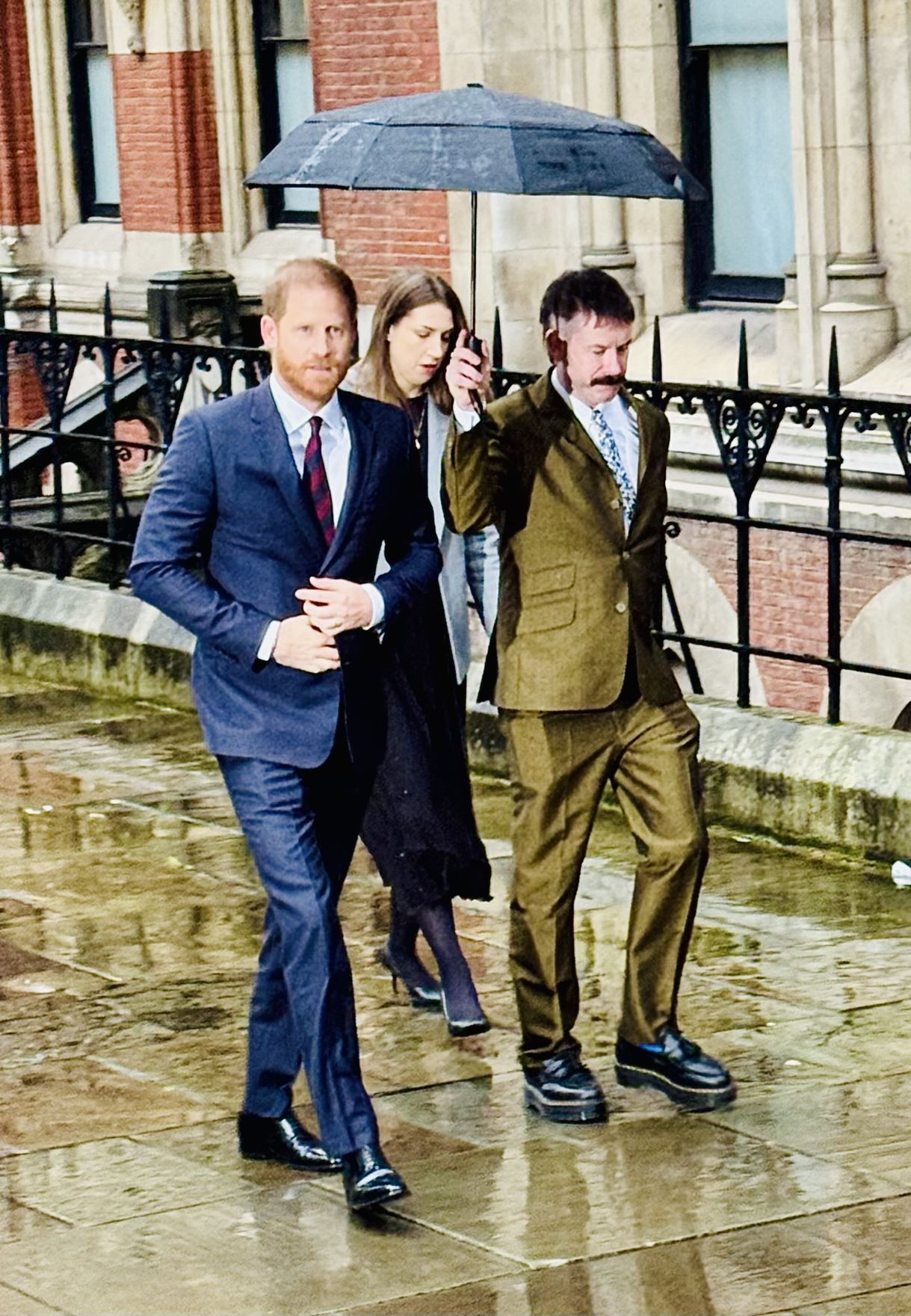
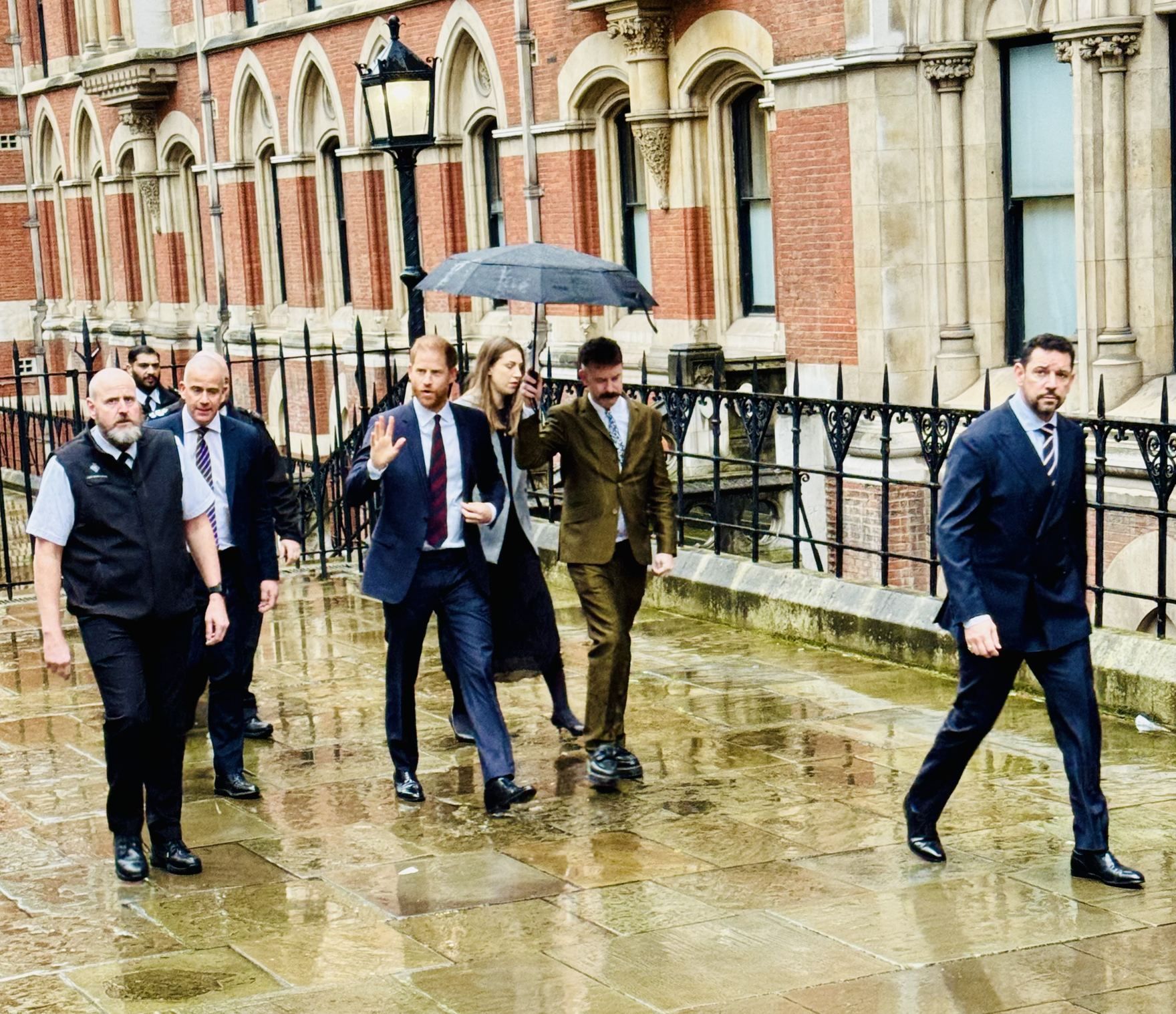
Prince Harry at the High Court: A Rain-Soaked Walk Into a Defining Media Trial
Royal Courts of Justice, London · January 2026
Prince Harry arrived at the Royal Courts of Justice under grey skies and steady rain, flanked by security and legal advisers, as one of the most consequential media law cases of the post-Leveson era resumed inside. This is not a spectacle trial. It is a granular, document-heavy dispute over sources, inference, and the limits of journalistic responsibility, unfolding in a courtroom atmosphere closer to a modern lecture hall than a Victorian showpiece. From outside, however, the symbolism is unavoidable: a senior royal, walking past press cameras, to argue that parts of the British press crossed the line while being rigorously tested, minute by minute, by the very legal standards that underpin press freedom. Inside the Courtroom Reporting from the High Court, BBC journalists described a tense but controlled atmosphere as Prince Harry returned to the witness box. He is being questioned by Antony White KC, acting for Associated Newspapers Limited (ANL), publisher of the Daily Mail and Mail on Sunday. The questioning has focused less on headline drama and more on chronology: • whether Prince Harry, or anyone acting on his behalf, complained at the time of publication • whether he believed articles were sourced legitimately when they appeared • and whether his objections are retrospective, shaped by later revelations about unlawful information gathering elsewhere in the industry. White KC has repeatedly put to the court that no contemporaneous complaint was made because the duke accepted, at the time, that the information appeared to come from legitimate sources. Prince Harry has agreed “to an extent”, while arguing that royal convention, the institutional policy of “never complain, never explain,” effectively prevented him from acting. The Katie Nicholl Question A significant portion of today’s evidence has centred on royal journalist Katie Nicholl and whether proximity, access, or social overlap undermines claims of unlawful sourcing. Prince Harry has rejected the suggestion that he was friends with journalists who wrote articles about him, disputing claims that Nicholl was part of his social circle, while accepting that she attended events in overlapping environments. At one point, the judge intervened to remind the duke that his role was to answer questions, not argue the case, a moment that underscored the court’s focus on precision over emotion. A Media-Law Reality Check From a media industry perspective, the case's shape is becoming clearer. This is not a broad referendum on press behaviour, nor a replay of phone-hacking scandals. It is a narrow, forensic examination of: • What can be inferred from proximity • what constitutes lawful newsgathering • and whether suspicion alone can meet the evidential threshold required in civil claims. Judicial interventions so far suggest a court determined to separate institutional grievance from legal proof. For working journalists, editors, and publishers, the outcome is likely to reinforce an uncomfortable but familiar reality: journalism is judged not by reputation or inference, but by demonstrable method. Probable Direction of Travel (Industry View) While final outcomes remain uncertain, the balance of questioning to date points toward a measured, media-literate judgment rather than a sweeping condemnation. Courts tend to resist retrospective reconstruction of intent, particularly where: • articles were published openly • No immediate objection was raised • and alternative lawful explanations for sourcing remain plausible. If that trajectory holds, the case may ultimately clarify boundaries rather than redraw them, reinforcing compliance standards without fundamentally weakening press freedom.