He’s Behind You: Spin, War, and the Day the Narrative Broke
North London, United Kingdom · 16 to 17 July 2003
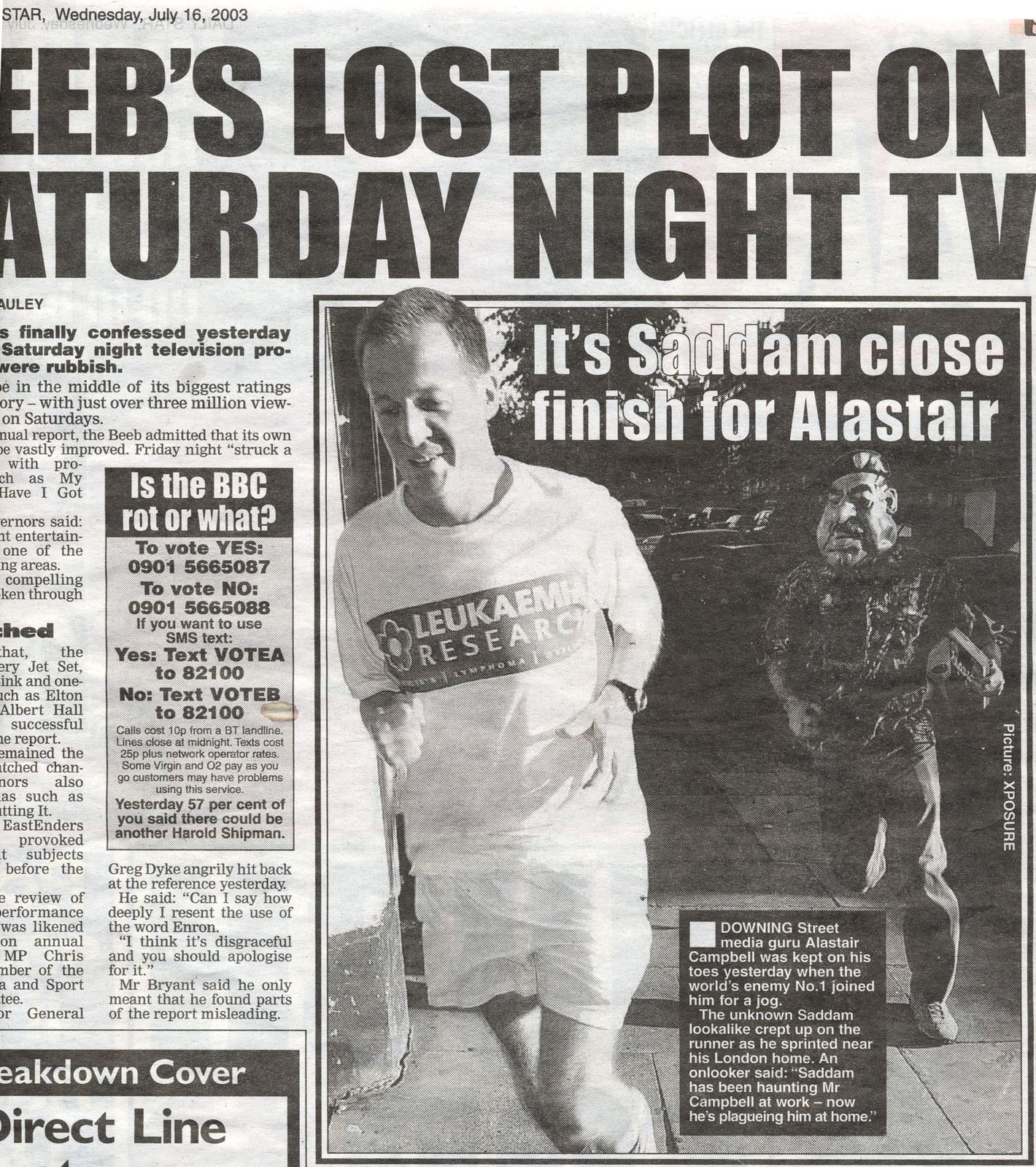
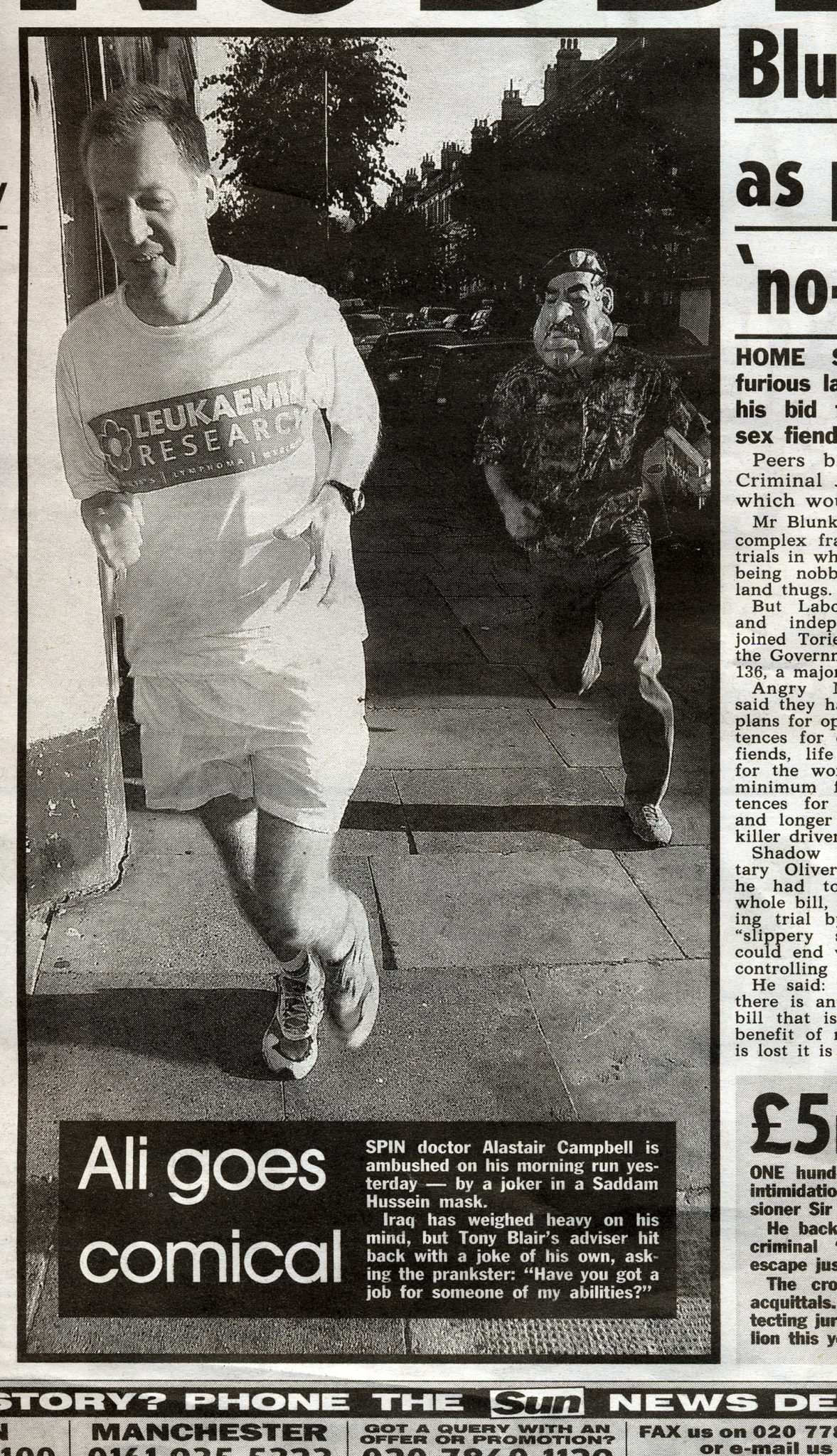
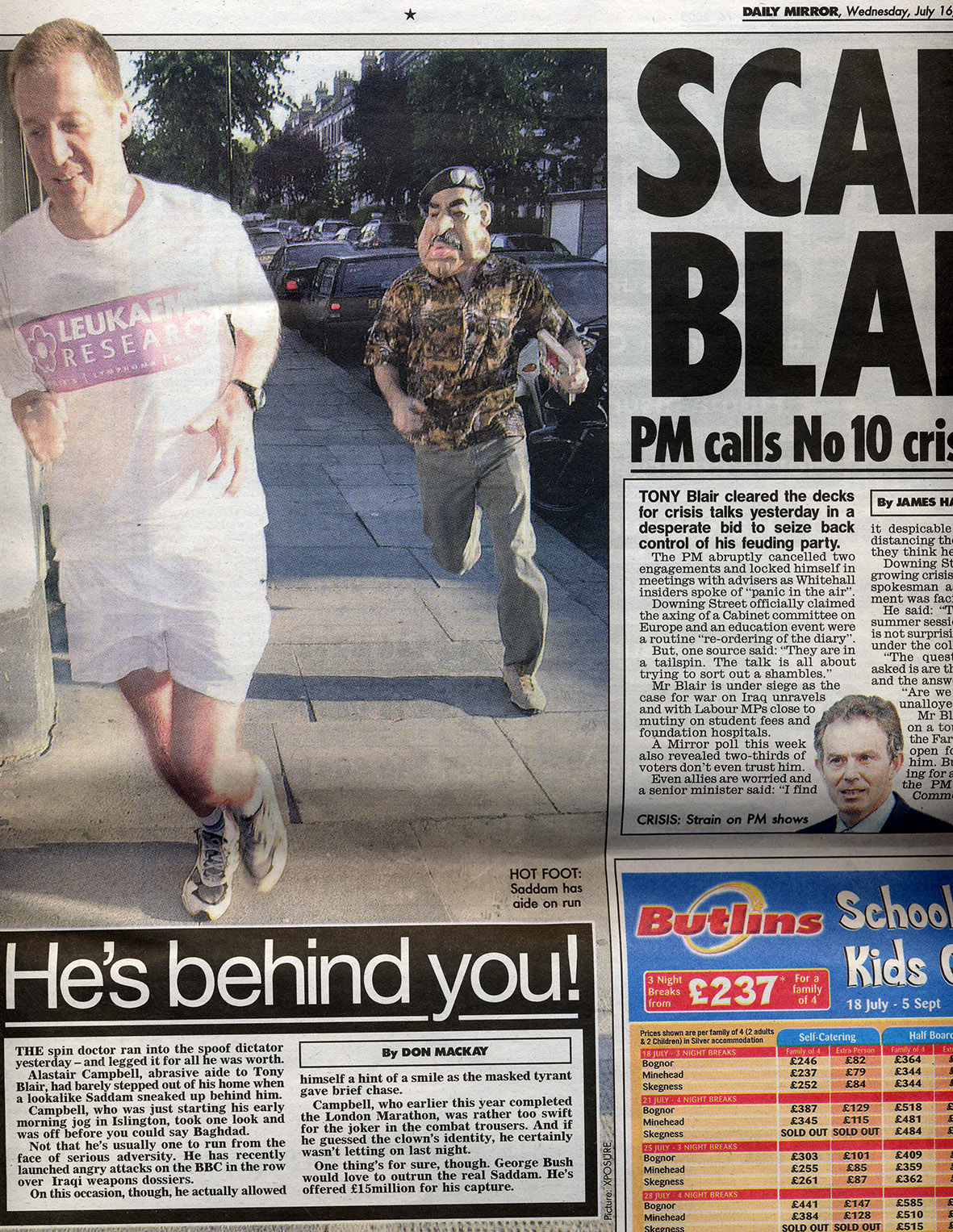
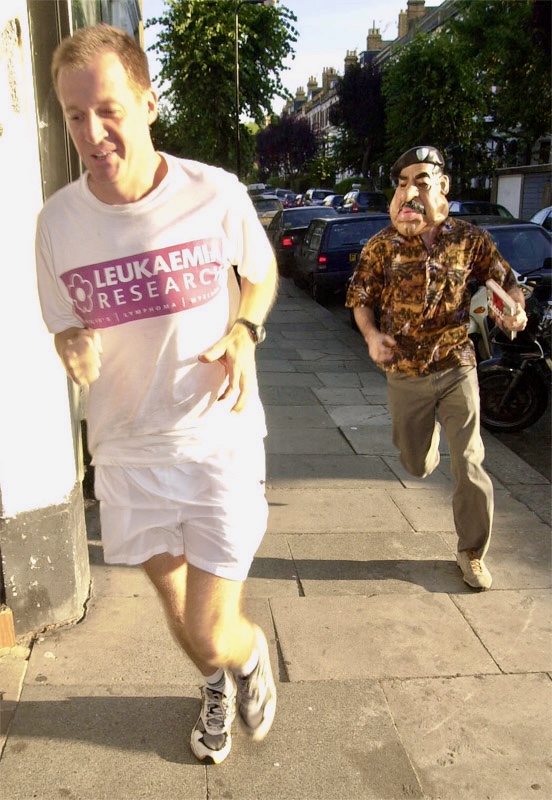
Mid-July 2003 was the moment the Iraq War stopped being abstract. The invasion had already happened. The weapons had not been found. The justifications were fraying. Inside Whitehall and the BBC, blame was being quietly repositioned. Publicly, the language was still firm. Privately, it was collapsing. On 16 July 2003, Alastair Campbell, press secretary to Tony Blair and the most feared communications operator in British politics, stepped out for his morning run near his home in north London. What followed looked, at first glance, like a prank. A man in a Saddam Hussein mask appeared behind Campbell and gave chase down a residential street. The image was irresistible to picture desks: absurd, theatrical, comic. A dictator reduced to slapstick. Power mocked. But this was not street theatre in a vacuum. It was not “just a joke.” The masked figure was carrying a Campbell book a political memoir that would later set out his account of power, persuasion, and the machinery of New Labour. That detail mattered. It turned farce into accusation. At the time, Campbell was under sustained scrutiny for his role in shaping the government’s Iraq weapons dossiers documents later shown to contain exaggerated and misleading claims, including the infamous assertion that weapons of mass destruction could be deployed within 45 minutes. The charge was not that Campbell had lied alone, but that he had engineered certainty where none existed. The chase happened as the political system was already in crisis mode. The following day 17 July 2003 David Kelly was found dead in Oxfordshire, England. Kelly, a respected government scientist, had been identified as the source who challenged the intelligence claims underpinning the war. His death transformed a dispute about wording, sourcing, and editorial pressure into something irreversible. What had been a media and political scandal became a national trauma. Seen in that light, the images from 16 July no longer read as comedy. They read as a warning. The war had crossed back over the screen. Its symbols were no longer contained by briefing rooms, studios, or press releases. The dictator invoked to sell the conflict was now literally on the heels of the man accused of selling it his own narrative held up against him in hardback form. William Randolph Hearst famously declared, “You furnish the pictures, and I’ll furnish the war.” The line has become shorthand for yellow journalism’s role in manufacturing conflict. But by 2003, the relationship had inverted. The war had begun furnishing its own pictures uninvited, uncontrolled, and deeply uncomfortable. This photo essay documents that moment: not as a stunt, but as a rupture. A day when spin failed to hold, when symbolism turned feral, and when the distance between propaganda and consequence collapsed on an ordinary London pavement. The joke, it turned out, was never the mask. It was the belief that images, once released, could still be controlled.