The Maharaja of Faridkot: A forged will and a three-decade battle over a reported US$2.4 billion royal estate
How a disputed 1982 will, later declared forged by the courts, triggered a three-decade battle over a reported US$2.4 billion royal estate.
Charles Pycraft · 23 May 2026 · Faridkot, Punjab & Chandigarh, India
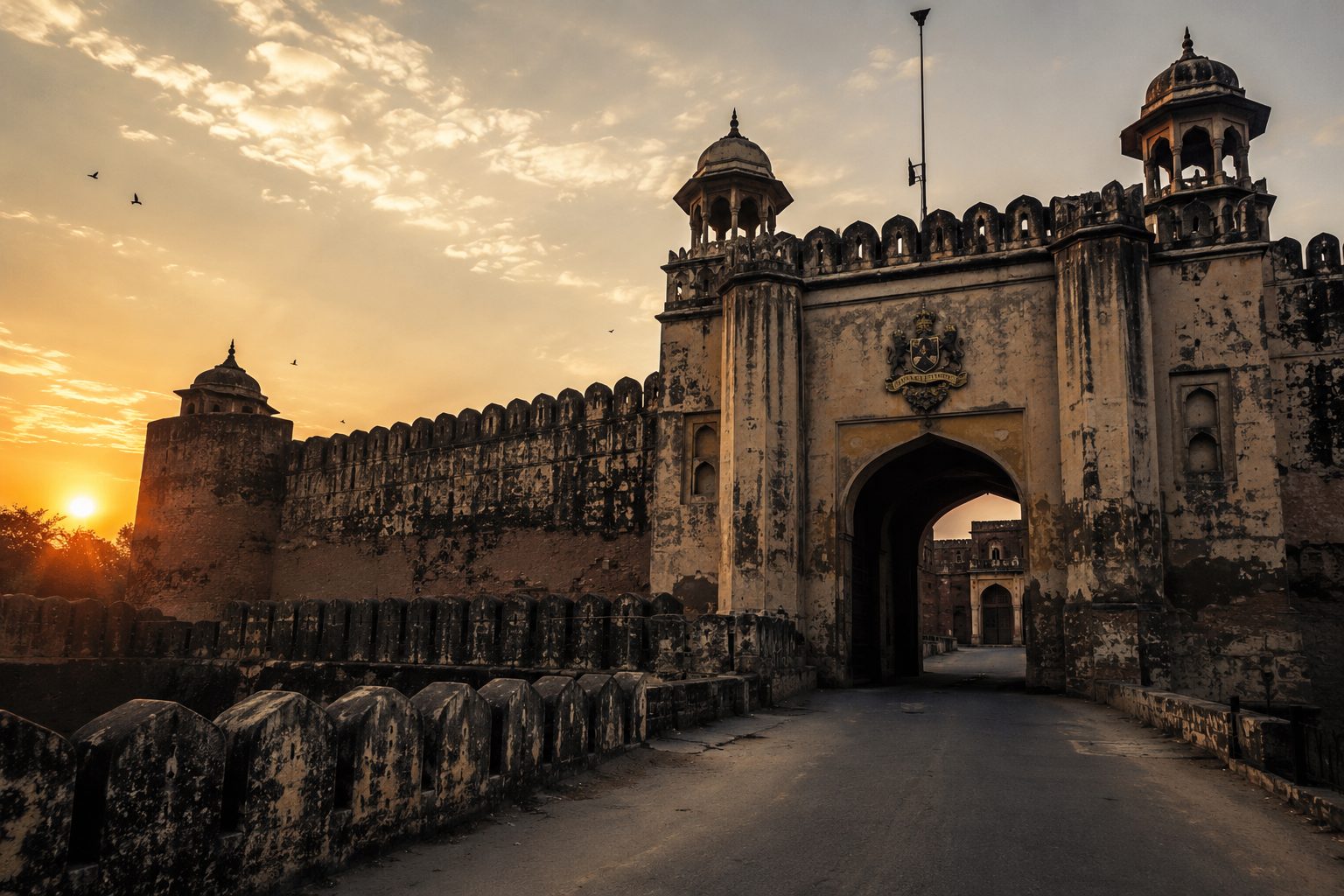
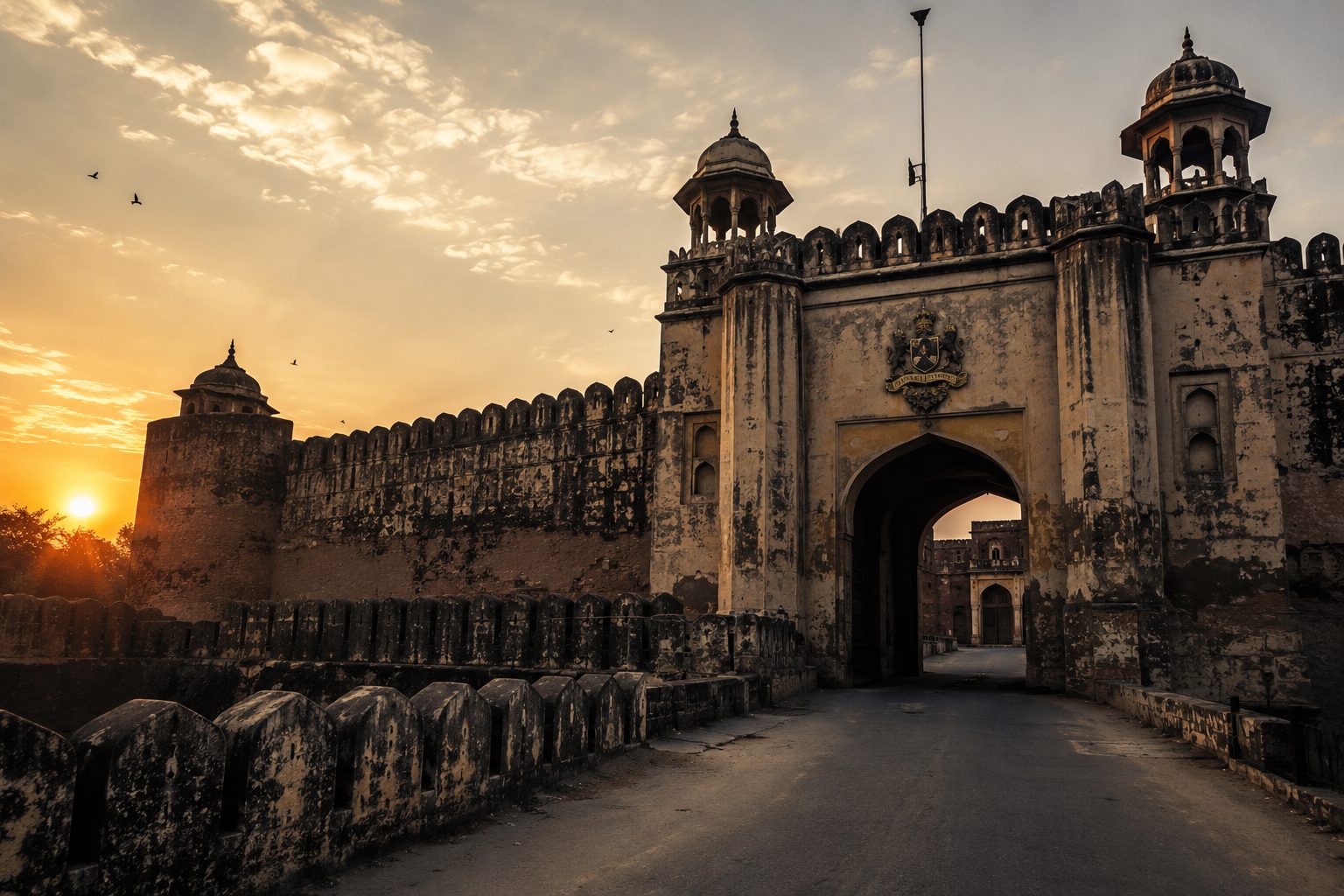
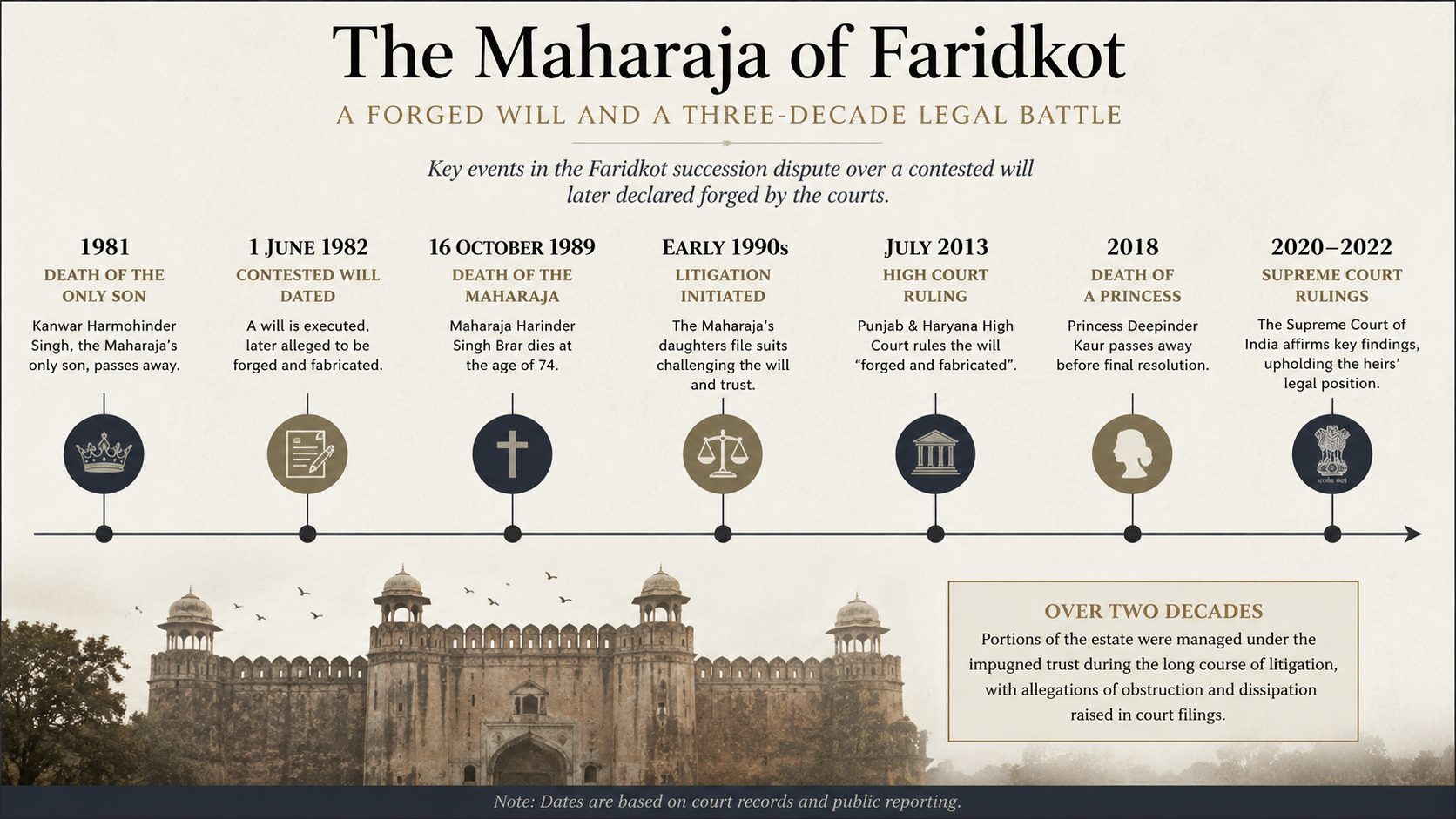
At sunrise, Faridkot Fort emerges slowly from the haze of southern Punjab. The walls are thick, uneven in colour, and marked by centuries of repairs. Stray dogs move through empty courtyards. A faded crest remains visible above one gateway. The atmosphere is less one of royal grandeur than of prolonged transition. For decades after Indian independence, estates like Faridkot existed in a suspended state between monarchy and private ownership. Titles had lost constitutional meaning. Privy purses were abolished in 1971. Yet land, palaces, jewellery, vintage cars, agricultural holdings, and urban property portfolios remained concentrated within a handful of former princely families. When Maharaja Harinder Singh Brar died on 16 October 1989 at the age of 74, the future of one of northern India’s last major royal estates appeared uncertain but manageable. His only son had died years earlier. His daughters expected succession negotiations, legal complexity, and family disagreements. What followed instead became a dispute lasting more than two decades. At the centre of the conflict stood a will dated 1 June 1982, a document that Indian courts would later find to have been forged.
The Mechanics of Disinheritance
The transition of India’s princely families into modern private wealth structures created unusually fragile inheritance arrangements. Estates that once operated through hereditary authority increasingly depended upon trusts, legal intermediaries, administrators, accountants, and political relationships. According to court records, the disputed Faridkot will dramatically altered the expected distribution of the estate. Operational control was placed into a trust structure involving palace employees, retainers, lawyers, and administrative figures. The Maharaja’s eldest daughter received no share. Other family members were reportedly allocated comparatively modest monthly provisions rather than direct ownership. The structure raised immediate questions among surviving heirs. Litigation began in the early 1990s and would eventually move through multiple judicial layers over more than twenty years. In July 2013, the Punjab and Haryana High Court delivered a detailed ruling declaring the will “forged and fabricated.” The judgment examined signatures, attestations, procedural irregularities, and evidentiary inconsistencies surrounding the document. Subsequent Supreme Court proceedings upheld central aspects of the High Court’s findings, including rulings delivered in 2022. The legal language remained restrained. The implications were not. Control over a vast estate had, for years, rested upon a document later rejected by the courts.
Timeline of a Three-Decade Dispute
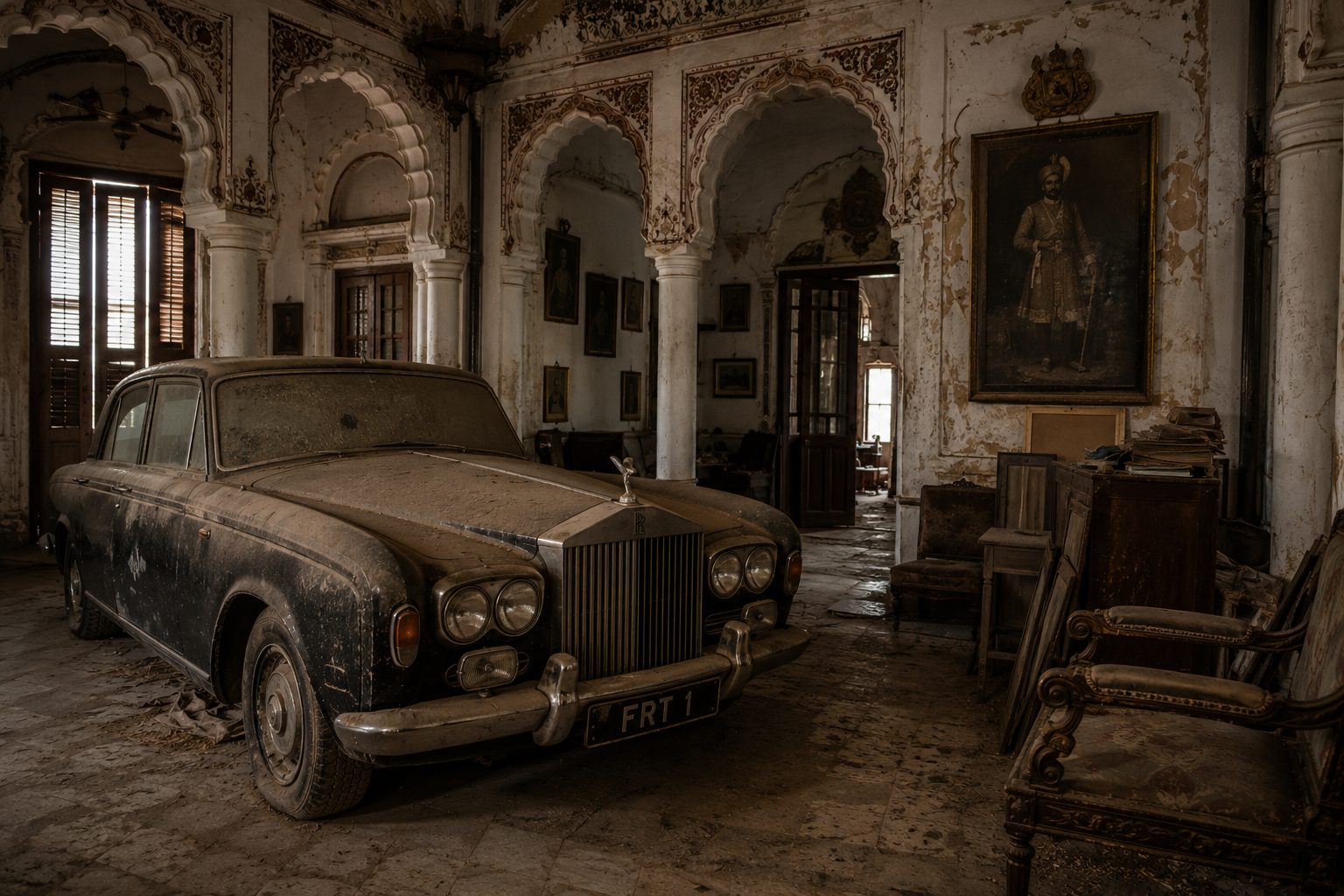
The pace of the proceedings reflected broader realities of Indian civil litigation, particularly in inheritance and property matters involving substantial wealth. During the intervening decades, portions of the estate reportedly deteriorated, while questions surrounding management, asset control, valuation, and trustee conduct remained unresolved. Court filings referenced accusations of obstruction and prolonged procedural delay. Those matters remained heavily contested throughout proceedings. Meanwhile, the estate itself continued to exist physically across multiple locations: * Faridkot Fort in Punjab * agricultural land holdings * urban properties in Delhi * collections of vehicles and valuables * associated royal assets accumulated over generations The litigation outlasted not only political administrations and legal teams, but some of the claimants themselves.
Paper Authority and Trustee Control
Large inheritance disputes often reveal a tension that extends beyond family conflict. The issue is operational control. In many legacy wealth structures, trustees and long-serving administrators possess informational advantages unavailable to heirs themselves. They understand records, asset locations, procedural mechanisms, local relationships, and institutional pathways. The Faridkot litigation exposed how documentary authority can become detached from blood succession. Even after India abolished formal princely privileges, former royal estates retained substantial economic value. Prime agricultural land, Delhi real estate, heritage properties, and collectable assets all appreciated significantly over the subsequent decades. The incentives surrounding control, therefore, remained considerable. Public reporting and court proceedings placed the estate's valuation at approximately ₹20,000 crore (US$2.4 billion), though precise figures remained disputed throughout the litigation. The dispute also illustrated the durability of paperwork inside slow-moving legal systems. Once control structures are embedded through trusts, probate filings, or administrative management, reversing them can require decades of litigation, even when courts later determine that foundational documents are invalid. Paper authority often outlasts political legitimacy itself.
The Human Cost of Delay
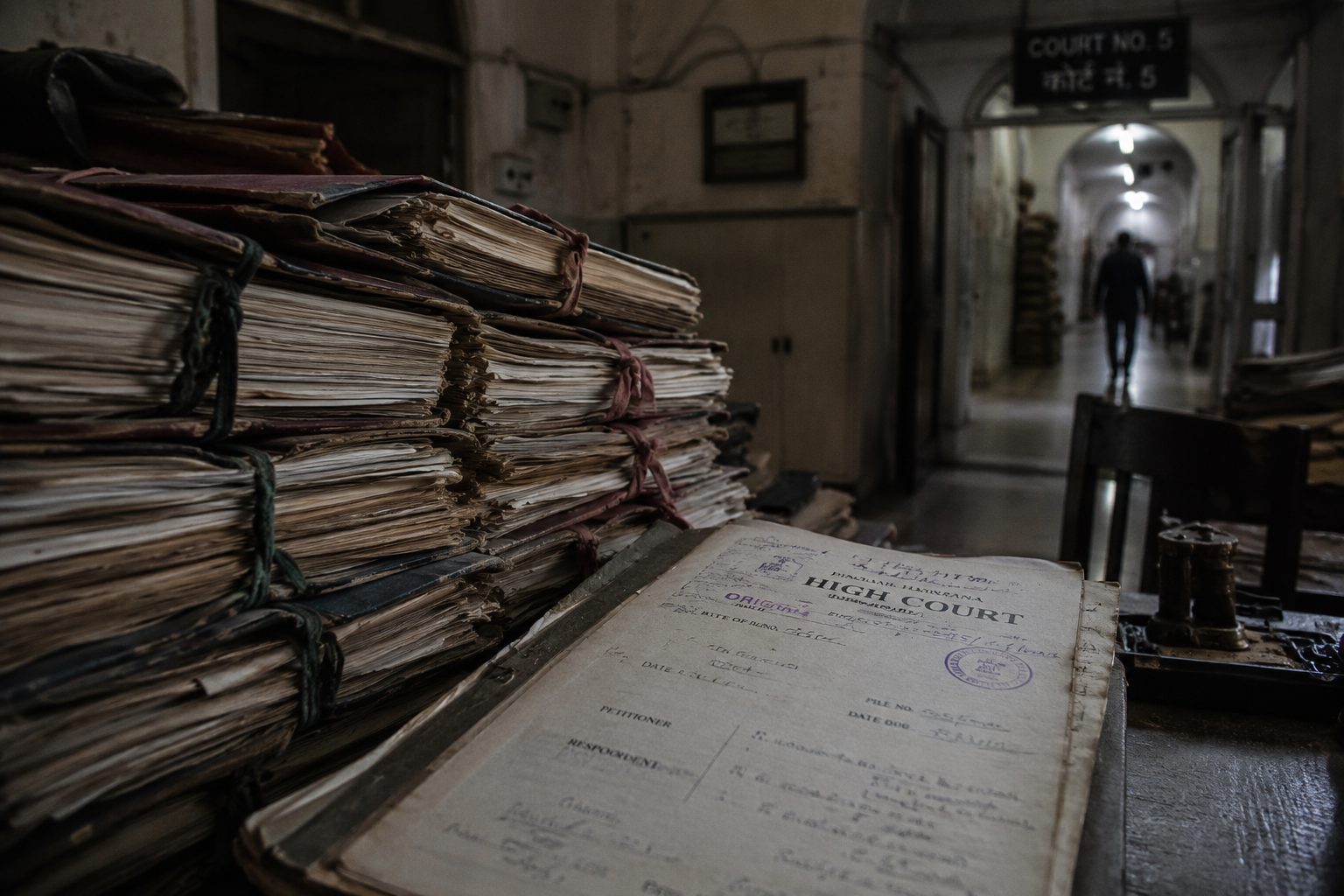
By the time major rulings emerged, more than twenty years had passed since the Maharaja’s death. One of the princesses, Deepinder Kaur, died in 2018 before the dispute was resolved. The broader human consequences extended beyond inheritance calculations. Long-duration litigation imposes cumulative pressure: * legal costs * asset fragmentation * emotional exhaustion * maintenance decline * tax exposure * intergenerational uncertainty The physical estate reflected aspects of this erosion. Some portions of Faridkot’s former royal infrastructure remain operational or publicly accessible. Other sections show signs of deferred maintenance, fragmented stewardship, or partial abandonment. The atmosphere is neither entirely ruined nor fully preserved. Instead, it carries the visual texture of prolonged legal suspension. In Chandigarh, where much of the litigation unfolded, stacks of paper records, procedural filings, and appeals accumulated over years of hearings. The administrative machinery moved steadily, though rarely quickly. For observers of elite inheritance systems, the case became less about royal spectacle than about institutional endurance. A contested document had shaped the control of enormous wealth for decades before the courts definitively intervened.
Why the Faridkot Case Still Matters
The Faridkot dispute sits at the intersection of several broader realities shaping wealth preservation in modern India: * the transition from dynastic authority to legal administration * the fragility of trust governance * the concentration of wealth within opaque structures * the slow pace of civil adjudication * the increasing importance of documentary control It also highlights how inheritance disputes are rarely purely familial. They become contests involving: * administrators * trustees * lawyers * political relationships * land valuation * procedural leverage * reputational positioning The outcome of litigation may determine legal ownership, but it may not necessarily restore lost time, deteriorated assets, or fractured relationships. At Faridkot Fort, the walls still stand. But the authority once associated with them has changed form entirely.

Field Observation
At ground level, the estate feels less cinematic than administrative. The visual reality is paperwork, maintenance, corridors, locks, inventories, signatures, and long procedural waits. The grandeur exists, but unevenly. In Faridkot itself, local life moves around the remnants of princely infrastructure with little ceremony. Traffic passes the old gates. Government offices occupy former royal spaces. Dust settles across fading surfaces. The contrast is striking. The dispute was often described publicly in terms of royalty and inheritance. In practice, it became a prolonged struggle over documentation, control mechanisms, and institutional endurance.
Key Findings
Key Findings * The Punjab and Haryana High Court declared the 1982 will “forged and fabricated” in 2013. * Supreme Court proceedings later upheld central aspects of those findings. * Litigation surrounding the estate continued for more than two decades. * Operational control of the estate had been placed into a trust structure involving non-family administrators. * The estate reportedly included extensive landholdings, palaces, vehicles, and urban property. * One heir died before the legal proceedings were fully resolved.
Sources
- https://indiankanoon.org/doc/18219309/
- https://api.sci.gov.in/supremecourt/2020/14732/14732_2020_1_1501_38039_Judgement_07-Sep-2022.pdf
- https://www.bbc.com/news/world-asia-india-63080909
- https://timesofindia.indiatimes.com/city/chandigarh/faridkot-maharajas-will-found-to-be-forged-punjab-and-haryana-high-court/articleshow/76146708.cms
- https://www.livelaw.in/news-updates/punjab-haryana-high-court-declares-faridkot-maharajas-will-as-forged-158306
- https://www.tribuneindia.com/news/punjab/faridkot-royal-inheritance-battle-lands-back-in-supreme-court/
- https://lawbeat.in/news-updates/who-gets-the-faridkot-fortune-sc-halts-execution-will-revisit-inheritance-dispute-1516651
- https://en.wikipedia.org/wiki/Faridkot_State