From Observation to Influence
Consensus Reality, Narrative Fragmentation, and the Economics of Attention
Charles Pycraft · February 2026 · London
There was a time when “reality” felt broadly shared. People disagreed often fiercely about politics, ideology, and interpretation. But beneath those disagreements sat a common informational baseline. Same headlines. Same events. Same reference points. That stability has eroded. What we are witnessing today is not simply information overload, but the collapse of shared perceptual frameworks. Reality is no longer collectively negotiated. It is individually experienced.
The core issue isn’t information overload, though that’s part of it. It’s perceptual divergence: the way digital ecosystems subtly diverge our realities. Platforms like Facebook, Twitter (now X), YouTube, and TikTok don’t broadcast uniformly; they personalise. Every scroll, like, share, or dwell time on a post feeds into an algorithmic profile. This profile then filters the world for you, prioritising content that keeps you engaged. Consider the mechanics. As revealed in investigations into platforms’ inner workings, algorithms are designed to maximise “time on site” and interactions. They learn from your behaviour: If outrage sparks your clicks, you’ll see more inflammatory content. If novelty hooks you, expect a stream of surprises. This isn’t neutral curation; it’s optimisation for retention. A 2018 Guardian exposé on Cambridge Analytica highlighted how such systems could be weaponised, harvesting data from millions of Facebook profiles to micro-target voters with tailored messages. But even without malicious intent, the effect is the same: echo chambers form, reinforcing biases and isolating users in bubbles. Unlike the broadcast era’s one-to-many model, today’s systems are many-to-one: a deluge of signals filtered for each receiver. Research from Nature Human Behaviour (2019) on adolescent well-being and digital technology underscores this, showing how personalised feeds can amplify small effects into broader polarisation. In one study analysing large datasets such as the Youth Risk Behaviour Survey and Monitoring the Future, researchers found that digital interactions often lead to fragmented experiences, in which users’ worldviews harden in isolation. The outcome? Two neighbours might witness the same global event, a protest, an election, a pandemic, yet emerge with incompatible understandings. One sees a righteous uprising; the other, a manufactured crisis. Reality, once a shared terrain, becomes a personalised simulation.
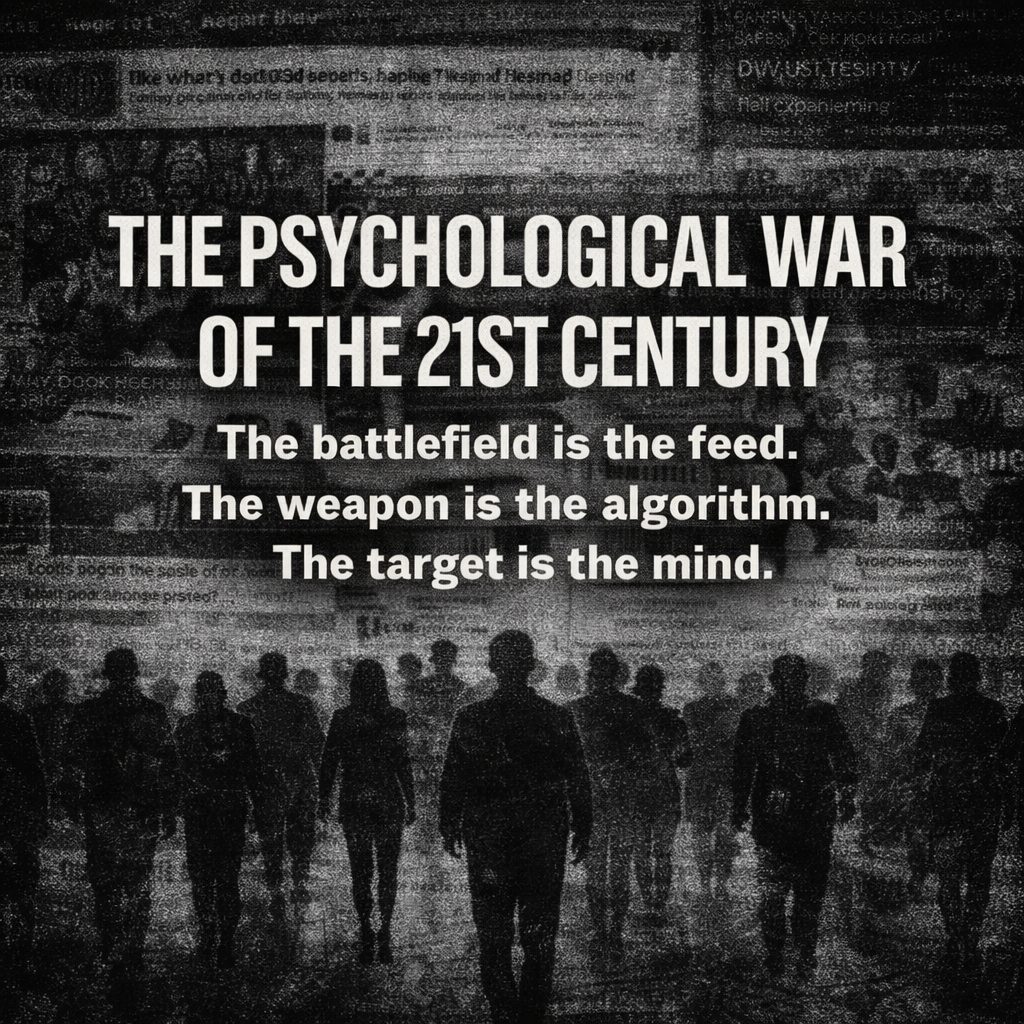
THE FRAGMENTATION OF PERCEPTION
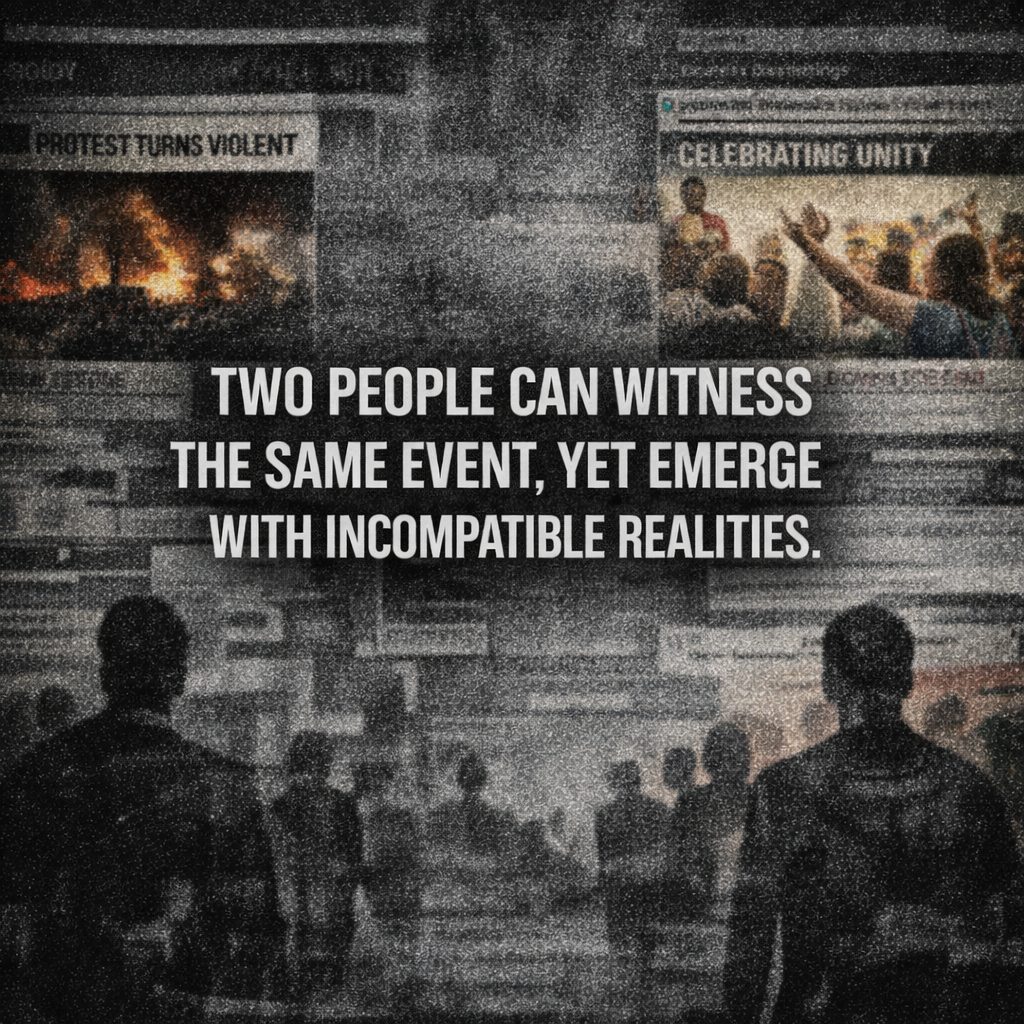
The core issue isn’t information overload, though that’s part of it. It’s perceptual divergence: the way digital ecosystems subtly diverge our realities. Platforms like Facebook, Twitter (now X), YouTube, and TikTok don’t broadcast uniformly; they personalise. Every scroll, like, share, or dwell time on a post feeds into an algorithmic profile. This profile then filters the world for you, prioritising content that keeps you engaged. Consider the mechanics. As revealed in investigations into platforms’ inner workings, algorithms are designed to maximise “time on site” and interactions. They learn from your behaviour: If outrage sparks your clicks, you’ll see more inflammatory content. If novelty hooks you, expect a stream of surprises. This isn’t neutral curation; it’s optimisation for retention. A 2018 Guardian exposé on Cambridge Analytica highlighted how such systems could be weaponised, harvesting data from millions of Facebook profiles to micro-target voters with tailored messages. But even without malicious intent, the effect is the same: echo chambers form, reinforcing biases and isolating users in bubbles. Unlike the broadcast era’s one-to-many model, today’s systems are many-to-one: a deluge of signals filtered for each receiver. Research from Nature Human Behaviour (2019) on adolescent well-being and digital technology underscores this, showing how personalised feeds can amplify small effects into broader polarisation. In one study analysing large datasets such as the Youth Risk Behaviour Survey and Monitoring the Future, researchers found that digital interactions often lead to fragmented experiences, in which users’ worldviews harden in isolation. The outcome? Two neighbours might witness the same global event, a protest, an election, a pandemic, yet emerge with incompatible understandings. One sees a righteous uprising; the other, a manufactured crisis. Reality, once a shared terrain, becomes a personalised simulation.
CONSENSUS REALITY VS PERSONALISED REALITY
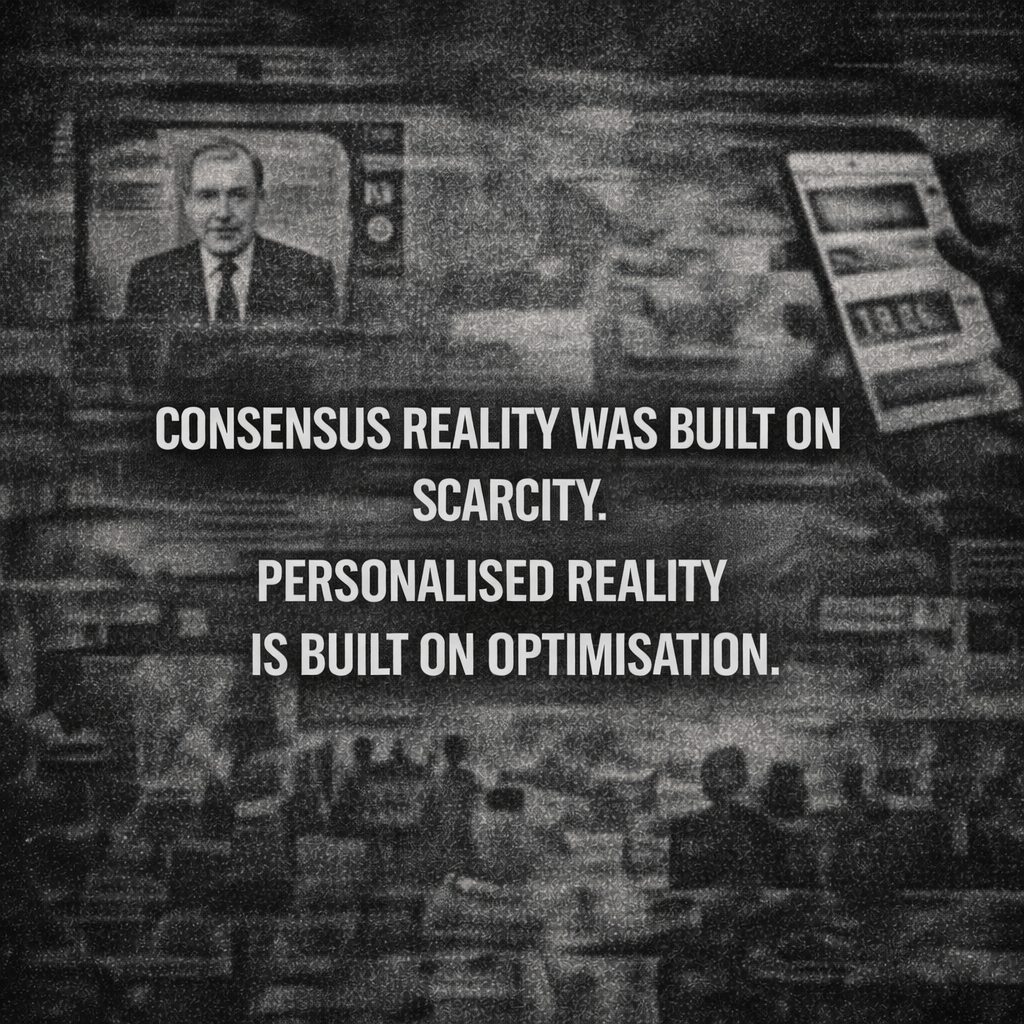
Historically, mass media enforced a kind of consensus through scarcity. Limited channels meant overlapping exposure: Walter Cronkite’s nightly news reached tens of millions with the same script. Bias existed, think of yellow journalism or state propaganda, but audiences shared the raw material for debate. Digital logic inverts this. Algorithms prioritise “relevance,” defined by prior engagement. A Science journal study (2018) on the spread of true and false news online found that falsehoods diffuse farther and faster than truth, often because they’re novel or emotionally charged. False stories reached 1,500 people six times faster than true ones, amplified by bots and human sharers alike. This isn’t accidental; platforms’ business models reward virality. Personalisation exacerbates this. Your feed isn’t just filtered, it’s engineered. As MIT Technology Review detailed in a 2021 profile of Facebook’s AI struggles, algorithms like those powering News Feed have an “insatiable habit for lies and hate speech.” They boost divisive content because it drives engagement. In the U.S., this has led to polarised workforces, as Harvard Business Review (2022) notes, where employees navigate clashing realities shaped by their online bubbles. The peril is deeper than disagreement. When perceptual baselines diverge, consensus erodes. Societies lose the ability to negotiate shared truths, leading to volatility. Events like the January 6 Capitol riot, fueled by online narratives, illustrate how fragmented realities can manifest in real-world chaos.
THE SIGNAL-TO-NOISE RATIO PROBLEM
A common lament is that people today lack discernment too gullible, too illiterate. But the real culprit is structural: a collapsing signal-to-noise ratio. Noise misinformation, outrage bait, and conspiracy theories thrive in digital ecosystems. Signal verified facts, nuanced analysis struggles. Why? Platforms amplify what stimulates. Brookings Institution research (2018) on misinformation spread shows how algorithms favour emotionally charged content. In a natural experiment during the Toronto van attack, a journalist tweeted two eyewitness accounts: one (false) describing the attacker as “angry” and “Middle Eastern,” the other (true) as “white.” The false tweet exploded, garnering far more engagement. Algorithms detected the buzz and amplified it, creating a feedback loop. Noise’s advantages are baked in: • Emotional Intensity: Fear, anger, and surprise trigger shares. True stories often inspire trust or sadness, but less virally. • Novelty: As the Science study found, false news is 70% more likely to be retweeted because it’s novel. • Confirmation Bias: Algorithms reinforce what you already believe, per Wikipedia’s entry on algorithmic radicalisation. • Speed: Noise spreads frictionlessly; verification takes time. Discernment isn’t failing due to stupidity; it’s becoming cognitively expensive. In an attention economy, where platforms profit from your time, noise is subsidised.
WHY NOISE WINS
Noise doesn’t just compete; it’s systemically favoured. The economics of attention explain why. Platforms like Facebook and Google monetise engagement ads viewed and data collected. As Tristan Harris and Aza Raskin discuss on the “Your Undivided Attention” podcast from the Centre for Humane Technology, this creates a race to the bottom: Algorithms exploit human vulnerabilities for profit. A PNAS study (2022) on psychological targeting echoes this, showing how tailored appeals based on traits like extraversion or openness boost clicks by 40-50%. Cambridge Analytica exploited this, using psychometrics to craft messages that “target inner demons,” as whistleblower Christopher Wylie revealed. The result? An arms race in which noise evolves faster than defences. Deepfakes, AI-generated disinformation, and “hallucinated facts” (as Wired warns in 2023) compound the issue. Humans aren’t mentally ready for this “post-truth world,” per another Wired piece, where reality becomes pixels we invent.
NARRATIVE FRAGMENTATION AS SYSTEMIC BEHAVIOUR
Early internet utopians dreamed of collective intelligence: Networks connecting minds for shared wisdom. Reality delivered fragmentation, not one illusion, but many. This emerges from system design. As Wired’s 2018 op-ed on the “information war” argues, disinformation has evolved into high-stakes warfare. Adversaries exploit platforms’ features, turning them into battlegrounds. Fragmentation’s effects: • Polarisation: Beliefs harden in silos. • Volatility: Emotional whiplash from conflicting narratives. • Susceptibility: Disorientation makes people vulnerable to capture. • Instability: Consensus on basics (e.g., election integrity) crumbles. Religion and ideology resurge as anchors. Pew Research’s Global Religious Futures project shows that diverse societies like the U.S. are turning to stabilising frameworks amid chaos. Whether faith or secular tribes, humans crave coherence.
Cambridge Analytica: The Visible Inflexion Point
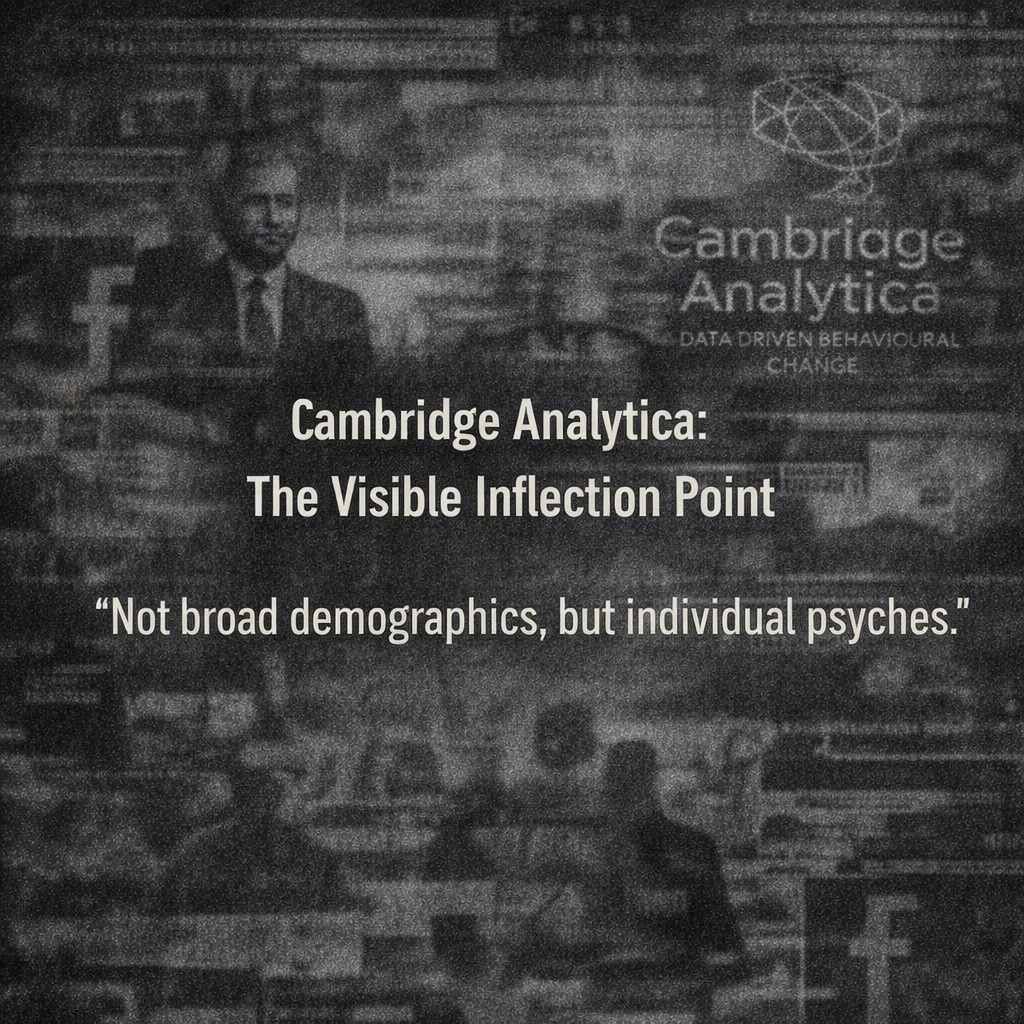
For many, Cambridge Analytica crystallised these dangers. The Guardian’s 2018 series exposed how the firm harvested 50 million Facebook profiles and built models to exploit psychological vulnerabilities. Owned by billionaire Robert Mercer and led by Steve Bannon, it targeted swing voters with precision propaganda. Wikipedia’s entry details the scandal: Data from a personality quiz app fueled campaigns for Trump and Brexit. Whistleblower Wylie described it as “psychological warfare.” The fallout? Facebook’s stock plunged, Zuckerberg apologised, and regulators scrambled. This wasn’t the new SCL Group, CA’s parent, that had influenced elections worldwide. But it made visible the shift from mass to micro-persuasion: Not broad demographics, but individual psyches.
The Return of Stabilising Frameworks
In unstable environments, humans seek anchors. Arthur C. Clarke’s dictum “Any sufficiently advanced technology is indistinguishable from magic” applies: AI and algorithms feel inscrutable, like sorcery. Explanatory voids fill with narratives. Religion, per APA insights, provides structure. Pew data shows that diverse nations like Singapore thrive on pluralism, while polarised ones like the U.S. are fracturing further. Secular substitutes for ideologies and identities emerge, too. Stabilisation is a cognitive necessity, not regression. From Observation to Influence My journey mirrors this evolution. As a photographer in media’s observational trenches, capturing paparazzi moments and documenting raw events, I’ve seen narratives form in real time. Now, collaborating in reputation strategy, the focus shifts: From capturing to shaping. Paparazzi hones skills in attention dynamics, timing, and scrutiny. Reputation work applies them in reverse: stabilising perceptions, navigating crises, positioning narratives in volatile digital terrain. It’s the same battleground, viewed from the defensive lines.
Continuity Beneath the Surface
Beneath shifts, continuity persists. Whether observing or influencing, core mechanics endure: Attention as currency, narratives as leverage. In reputation domains, we buffer against fragmentation, filter out noise, and reinforce the signal. It’s less about publicity than resilience in perceptual wars.
Conclusion: The Perception Battleground
If 20th-century conflicts were over territory, the 21st-century ones are over perception. Attention is the new terrain; coherence, the prize. Fascinating, unsettling, structural. As platforms evolve and AI deepens fragmentation, understanding these dynamics isn’t optional; it’s survival. The living notebook continues. What narratives shape your reality?
Sources
- https://www.theguardian.com/news/2018/mar/17/cambridge-analytica-facebook-influence-us-election?CMP=Share_iOSApp_Other
- https://hbr.org/2022/03/managing-a-polarized-workforce
- https://www.nature.com/articles/s41562-018-0506-1
- https://www.pnas.org/doi/10.1073/pnas.2207159119
- https://www.science.org/doi/10.1126/science.aap9559
- https://www.technologyreview.com/2021/03/11/1020600/facebook-responsible-ai-misinformation
- https://www.humanetech.com/podcast
- https://en.wikipedia.org/wiki/Algorithmic_radicalization?wprov=sfti1#References_in_media
- https://www.wired.com/story/misinformation-disinformation-propaganda-war/
- https://www.wired.com/story/generative-ai-deepfakes-disinformation-psychology/
- https://www.brookings.edu/articles/how-misinformation-spreads/
- https://www.theguardian.com/news/series/cambridge-analytica-files
- https://en.wikipedia.org/wiki/Cambridge_Analytica?wprov=sfti1
- https://www.pnas.org/doi/10.1073/pnas.1710966114
- https://www.apa.org/topics/belief-systems-religion/
- https://www.pewresearch.org/religion/