The American loophole: why the rules around Delaware, Nevada, Wyoming and South Dakota trusts are no longer fit for purpose
Delaware, Nevada, Wyoming and South Dakota trusts. US reporting under FATCA is narrower than the OECD Common Reporting Standard, and FinCEN's 2025 interim final rule, now final, exempts US companies from Corporate Transparency Act reporting.
Listen to this article
71 paragraphs
Charles Pycraft · November 2026 · London
This article is part of Offshore: the enabler chain. It sits in pillar 2: Why the watchdogs miss it, after Companies House identity checks: enforcement is no longer fit for purpose. For the wider map of where offshore money now sits, read Dubai, Singapore and the new quiet rooms first. Start with the series overview if you are new to the work.
Opinion. Updated on 14 November 2026.
The short version
The United States has exchanged account data under the Foreign Account Tax Compliance Act (FATCA) since 2015. It remains outside the OECD's Common Reporting Standard. Four states allow long-lived trusts and restrict some creditor claims. South Dakota seals trust court files by default. In 2025 and 2026, federal rules on company ownership reporting, certain residential property transfers and anti-money laundering controls for investment advisers were narrowed, vacated or delayed.
Using these trusts is lawful, and they serve ordinary families, charities and businesses. The question this piece asks is narrower: measured against the international standards the US itself helped to shape, are these arrangements still fit for the purpose of keeping illicit money out? In this piece's argued reading, they are not.
Systems that serve everyone are the ones that apply to everyone. When one large economy takes information from the world and returns less, the cost of that gap is carried by tax authorities, courts and honest businesses elsewhere.
Unequal exchange: FATCA and the Common Reporting Standard
FATCA generally requires foreign financial institutions to identify and report US accounts. Under Model 1 agreements, institutions report through their own tax authorities.
Under the US Treasury's reciprocal Model 1A agreement, partners report balances on reportable US accounts and identify specified US controlling persons of certain non-US entities. For reportable accounts, the US sends the holder's name, address and tax number, account and financial institution details, deposit interest and reportable US-source income, including dividends. The US list omits balances and controlling persons. Article 6(1) commits the US to pursue regulations and support legislation towards equivalent exchange.
The OECD developed the Common Reporting Standard (CRS). The OECD's list of commitments, last updated on 30 September 2026, shows more than 120 jurisdictions committed to exchange under it. The United States is not one of them. A footnote records that it exchanges under FATCA instead, and repeats the "equivalent levels" commitment.
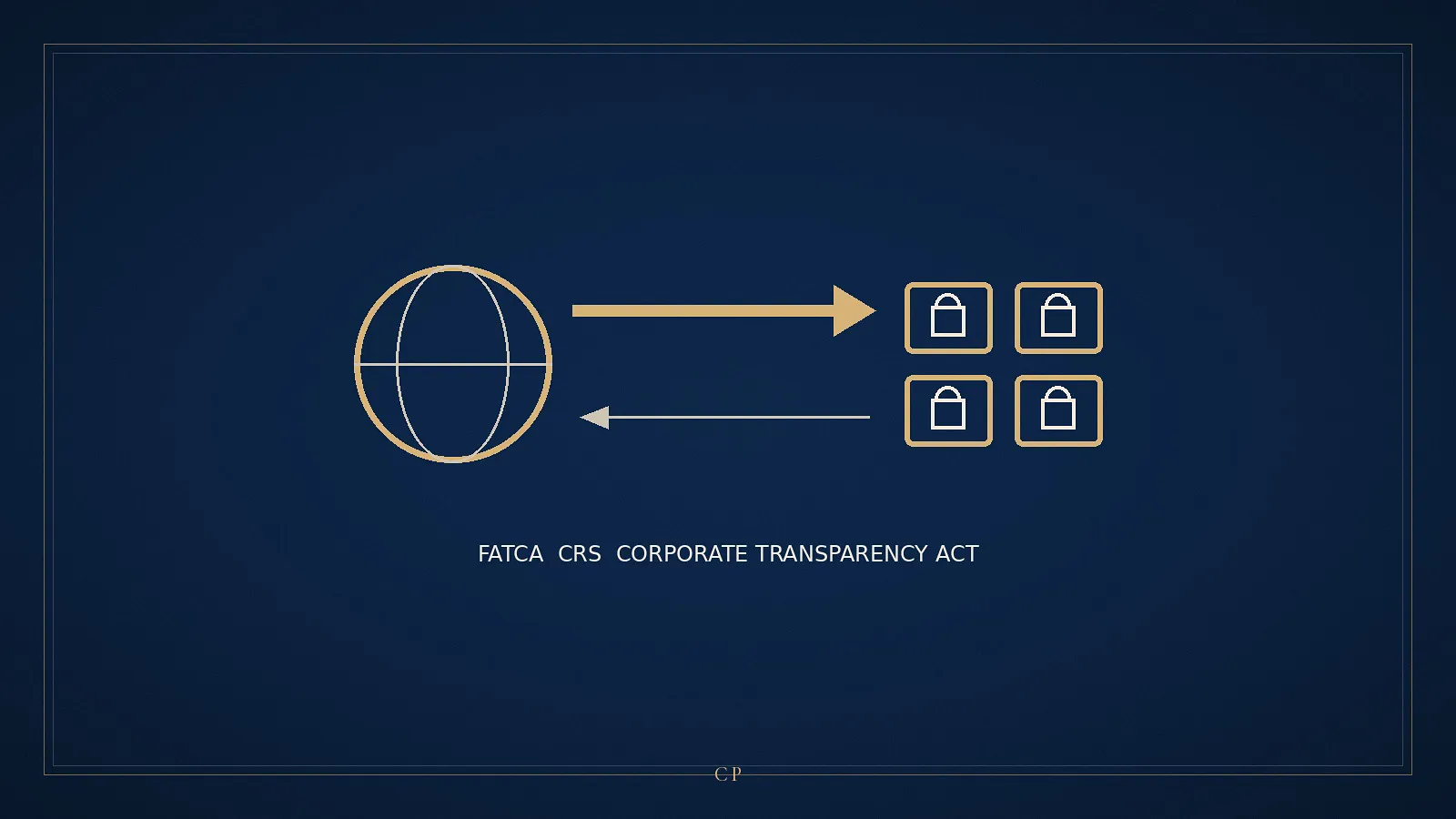
The practical result is a gap. A foreign tax resident holding assets through a US trust or company may go unidentified in automatic reporting on a US account. For a comparable reportable account, the CRS can supply the balance and, for a passive entity, identify its reportable controlling persons. This series sets out, in its piece on Jersey, Guernsey and the Isle of Man, the commitments those islands have made on access to their ownership registers. In this piece's reading, the world's largest economy has chosen a looser standard for itself.
What Delaware, Nevada, Wyoming and South Dakota trusts offer
The four states are not secrecy jurisdictions in the old sense. Their laws are published. What they offer is a combination of features, each lawful, under one state's law.
Length. South Dakota declared in 1983 that the common-law rule against perpetuities "is not in force". Delaware removed the rule for personal property in trust and generally requires distribution of real property after 110 years. Nevada allows interests to vest or terminate within 365 years. Wyoming allows qualifying trusts created after 1 July 2003 to hold property other than land for up to 1,000 years.
Protection from creditors, including for the settlor. All four allow a person to put assets into a trust from which they can still benefit, while limiting creditors' claims. Under South Dakota's 2005 law on qualified dispositions, creditors generally have two years from transfer to challenge it as fraudulent. Certain prior creditors have until six months after they discovered or reasonably could have discovered the transfer, if later. Nevada's NRS 166.040 allows a settlor to be a beneficiary of an irrevocable spendthrift trust not intended to defraud known creditors, and NRS 166.170 sets a two-year limit for later creditors. Delaware's Qualified Dispositions in Trust Act gives later creditors four years from transfer. Wyoming can bar challenges to qualified transfers to a qualified spendthrift trust 120 days after statutory notice, with a longer period for certain prior claimants (W.S. 34-14-210).
Privacy. Under SDCL 21-22-28, South Dakota seals the trust instrument and court file on filing. Access extends to the court, settlor, fiduciaries, enforcers, beneficiaries or their representatives, their lawyers, and other interested persons who obtain a court order by showing need.
Divided responsibility. Directed-trust laws let a trust split roles. Under Delaware's section 3313, a trustee who follows an adviser's direction is not liable for resulting loss except for "wilful misconduct", and has no monitoring duty by default. South Dakota's chapter 55-1B gives an "excluded fiduciary" similar protection. Both laws make directing advisers fiduciaries by default. South Dakota requires a fiduciary in the relevant role before other advisers can act in a non-fiduciary capacity. Neither provision requires directing advisers to be regulated trust companies.
What the Pandora Papers showed about US trusts
In October 2021 the International Consortium of Investigative Journalists published Pandora Papers reporting on US trusts. ICIJ reported that it had identified 206 US-based trusts linked to 41 countries, holding combined assets of more than $1 billion, and that nearly 30 held assets connected to people or companies accused of fraud, bribery or human rights abuses. It reported that assets in South Dakota trusts had more than quadrupled in a decade to $360 billion. ICIJ said the documents held no evidence that foreign clients of US trusts had sheltered criminal proceeds. These are ICIJ's findings, cited here as reporting.
ICIJ also recorded the state regulator's answer: trust companies must confirm the identity of their customers, foreign clients and assets receive extra scrutiny, and the state aims to examine trust companies at least once every two years. Those checks do not themselves make beneficiary information public or trigger automatic exchange.
ICIJ documented a 2019 transfer of trusts from a Bahamas trust company to South Dakota. Its reporting did not establish why the trusts were moved.
The Corporate Transparency Act and FinCEN rules: narrowed, vacated, delayed
Congress passed the Corporate Transparency Act in 2021 to require companies to report their beneficial owners to a non-public database at FinCEN, the Treasury's financial intelligence unit. FinCEN's 2022 rule estimated about 32.6 million reporting companies in the first year. Many trusts fell outside the 2022 rule because they were created without a qualifying filing. Companies held by trusts could still have to report.
On 26 March 2025 FinCEN's interim final rule exempted domestic companies under the Corporate Transparency Act and US beneficial owners under a separate Bank Secrecy Act power. The final rule, effective 14 August 2026, retained those exemptions and extended them to US company applicants. FinCEN estimates about 28,000 foreign-formed reporting companies registered in the US in the first year. They still file even if all their beneficial owners are US persons. Treasury announced that FinCEN would delete previously reported information. The final rule describes a one-off deletion of records relating to exempt US companies and persons. On 27 October 2026, 20 states and the District of Columbia sued in the District of Oregon to set both rules aside and halt the deletion, which the complaint expects by February 2027 at the latest. Delaware and Nevada are among the plaintiffs. The case was pending at the time of writing.
Two further rules have stalled. FinCEN's residential real estate rule covered certain non-financed transfers of residential property to entities and trusts. Reporting began on 1 March 2026 after temporary relief from the 1 December 2025 start date. On 19 March 2026 the US District Court for the Eastern District of Texas vacated it, weeks after a federal court in Florida had upheld it. FinCEN has appealed. Reporting under the rule remains suspended while the Texas order stands. The earlier geographic targeting orders expired on 28 February 2026. The investment adviser rule, which would bring many private fund managers into anti-money laundering programmes and suspicious activity reporting, was postponed from 1 January 2026 to 1 January 2028, while FinCEN reviews the rule.
Treasury says the exemptions reduce burdens and meet the statutory tests. Commenters, including four senators, disputed FinCEN's case for the exemptions. H.R. 425 would limit beneficial ownership reporting to non-US owners of foreign-formed companies registered in the US and require deletion of excluded data within 90 days of enactment. The House Financial Services Committee advanced it 26 to 25 on 21 April 2026. It remains on the House Union Calendar. In its June 2026 review of tax information exchange on request, the OECD Global Forum found "no material progress" since 2018 on requiring all beneficial owners of trusts to be identified in all cases. It asked the US for a timetable and progress update by 31 March 2027. The Financial Action Task Force adopted its US evaluation in October 2026, for publication in December.
Why this reading says "no longer fit for purpose"
The test here is the purpose the US has itself endorsed: knowing who ultimately owns and controls assets, and sharing tax information with partners on equal terms. On the public record:
- under reciprocal Model 1A, the US receives reportable balances and certain controlling-person details. It returns fewer fields and commits to pursue equivalent exchange;
- four states allow long-lived trusts and restrict creditors' challenges to qualifying transfers by settlors. South Dakota seals trust court files by default;
- FinCEN has ended ownership reporting by US companies. Its residential property rule was vacated and its investment adviser rule was delayed.
In this piece's reading, the combination makes US trusts attractive to people seeking greater financial privacy. Under reciprocal FATCA agreements, partner tax authorities receive fewer categories of account information from the US than they send. That combination is what this piece calls the American loophole. It does not mean any particular trust is misused.
What should change
- Act on the US commitment to pursue reciprocity. Require reporting of balances and relevant controlling persons for partner jurisdictions, and open talks on CRS participation. Owners: Congress (Senate Finance and House Ways and Means), Treasury and the IRS.
- Restore beneficial ownership reporting for US companies. Amend the Act to require domestic reporting subject to targeted exemptions, bar blanket exemptions and require preservation of existing records. Owners: Congress (House Financial Services and Senate Banking) and FinCEN.
- Close the property and private-fund gaps. Give FinCEN express statutory authority to require residential property reports. Bring forward the investment adviser rule through rulemaking. Owners: Congress (House Financial Services and Senate Banking), Treasury and FinCEN.
- Report on trusts with foreign parties. Require US trustees of trusts with a non-US settlor or beneficiary to report settlors, trustees, any protectors, beneficiaries and other ultimate controllers to FinCEN. Authorise eligible disclosures through the IRS competent authority for tax requests and US federal intermediaries for law-enforcement requests. Owners: Congress, FinCEN and the IRS.
- Tighten state trust law. Extend the two-year deadlines for qualifying transfer challenges in Nevada and South Dakota, and review Wyoming's 120-day notice deadlines. In South Dakota, replace automatic sealing of trust court files with case-by-case orders. In all four states, bring advisers who direct investments or distributions under state supervision. Owner: state legislatures in Delaware, Nevada, Wyoming and South Dakota.
- Review US exchange on request and automatic exchange. Ask Global Forum members to press for the March 2027 trust ownership update and commission a separate comparison of reciprocal FATCA reporting with the CRS. Owner: members of the OECD Global Forum on Transparency and Exchange of Information for Tax Purposes.
A note on records
A trustee who keeps the deed, later variations and each distribution file can record them with a dated file receipt, so that a later copy produced to a court or a successor trustee can be compared with what was recorded. It cannot show that a figure is right or when a document was first created, and it opens nothing to the public. Partisan offers this service. I work on business development and communications for Partisan.
About this piece
Public sources only, as linked. It makes no allegations about any person, trust, trust company or adviser, and names none from the reporting it cites. Holding assets in a trust is not itself unlawful. Opinion is marked as argued reading. This piece is for general information and is not legal or tax advice.
Previous: Companies House identity checks: enforcement is no longer fit for purpose
Next: The Swiss SRO layer, STEP, and the cost of fighting back
Related: Dubai, Singapore and the new quiet rooms
Series overview: Offshore: the enabler chain
Sources
- OECD Global Forum, Status of commitments for the automatic exchange of financial account information (last update 30 September 2026): oecd.org/content/dam/oecd/en/networks/global-forum-tax-transparency/aeoi-commitments.pdf
- US Treasury, FATCA Model 1A intergovernmental agreement (reciprocal, preexisting TIEA or DTC), 30 November 2014, Articles 2 and 6: home.treasury.gov/system/files/131/FATCA-Reciprocal-Model-1A-Agreement-Preexisting-TIEA-or-DTC-11-30-14.pdf
- South Dakota Codified Laws 43-5-8: sdlegislature.gov/Statutes/43-5-8 ; 55-16-2 and 55-16-10: sdlegislature.gov/Statutes/55-16-2 , sdlegislature.gov/Statutes/55-16-10 ; 21-22-28: sdlegislature.gov/Statutes/21-22-28 ; 55-1B-2 and 55-1B-4: sdlegislature.gov/Statutes/55-1B-2 , sdlegislature.gov/Statutes/55-1B-4
- Nevada Revised Statutes 111.1031: leg.state.nv.us/nrs/NRS-111.html ; NRS 166.040 and 166.170: leg.state.nv.us/NRS/NRS-166.html#NRS166Sec040 , leg.state.nv.us/NRS/NRS-166.html#NRS166Sec170
- Wyoming Statutes 34-1-139: wyoleg.gov/statutes/compress/title34.pdf ; 4-10-510: wyoleg.gov/statutes/compress/title04.pdf
- Delaware Code title 25, section 503: delcode.delaware.gov/title25/c005/index.html ; title 12, sections 3570 to 3576 (Qualified Dispositions in Trust Act): delcode.delaware.gov/title12/c035/sc06/index.html ; title 12, section 3313: delcode.delaware.gov/title12/c033/index.html
- ICIJ, Suspect foreign money flows into booming American tax havens on promise of eternal secrecy, 4 October 2021: icij.org/investigations/pandora-papers/us-trusts-offshore-south-dakota-tax-havens/
- FinCEN, Beneficial Ownership Information Reporting Requirements, 87 FR 59498, 30 September 2022: federalregister.gov/documents/2022/09/30/2022-21020/beneficial-ownership-information-reporting-requirements
- FinCEN, interim final rule, 90 FR 13688, 26 March 2025: federalregister.gov/documents/2025/03/26/2025-05199/beneficial-ownership-information-reporting-requirement-revision-and-deadline-extension
- FinCEN, final rule, 91 FR 52508, 14 August 2026: federalregister.gov/documents/2026/08/14/2026-16576/beneficial-ownership-information-reporting-requirement-revision
- US Treasury press release sb0603, 11 August 2026: home.treasury.gov/news/press-releases/sb0603
- Complaint of 20 states and the District of Columbia against the US Treasury and FinCEN, US District Court for the District of Oregon, case 6:26-cv-02359, filed 27 October 2026: ag.ny.gov/sites/default/files/court-filings/oregon-et-al-v-scott-bessent-et-al-complaint-2026.pdf
- H.R. 425 (119th Congress), all actions: congress.gov/bill/119th-congress/house-bill/425/all-actions ; text as reported in the House, 18 June 2026: govinfo.gov/content/pkg/BILLS-119hr425rh/html/BILLS-119hr425rh.htm
- FinCEN, Anti-Money Laundering Regulations for Residential Real Estate Transfers, 89 FR 70258, 29 August 2024: federalregister.gov/documents/2024/08/29/2024-19198/anti-money-laundering-regulations-for-residential-real-estate-transfers ; Residential Real Estate newsroom and FAQs: fincen.gov/rre-newsroom , fincen.gov/rre-faqs ; FinCEN, Renews Residential Real Estate Geographic Targeting Orders (to expire 28 February 2026), 9 October 2025: fincen.gov/news/news-releases/fincen-renews-residential-real-estate-geographic-targeting-orders-0
- FinCEN, investment adviser AML/CFT rule, 89 FR 72156, 4 September 2024: federalregister.gov/documents/2024/09/04/2024-19260/financial-crimes-enforcement-network-anti-money-launderingcountering-the-financing-of-terrorism ; delay to 1 January 2028, 91 FR 36, 2 January 2026: federalregister.gov/documents/2026/01/02/2025-24184/delaying-the-effective-date-of-the-anti-money-launderingcountering-the-financing-of-terrorism ; FinCEN news release: fincen.gov/news/news-releases/fincen-issues-final-rule-postpone-effective-date-investment-adviser-rule-2028
- OECD Global Forum, Enhanced Monitoring Report on the Implementation of the Standard on Transparency and Exchange of Information on Request, 2026 Update (June), United States: oecd.org/en/publications/enhanced-monitoring-report-on-the-implementation-of-the-standard-on-transparency-and-exchange-of-information-on-request-2026-update-june_9ef50941-en/full-report/united-states_c0a0ad4d.html
- FATF, Outcomes FATF Plenary, 28 to 30 October 2026: fatf-gafi.org/en/publications/Fatfgeneral/outcomes-fatf-plenary-october-2026.html
- Wyoming Statutes 34-14-210 (extinguishment of claims; qualified spendthrift trust transfers): wyoleg.gov/statutes/compress/title34.pdf
- 31 U.S.C. 5336 (Corporate Transparency Act), US Code 2024 edition: govinfo.gov/content/pkg/USCODE-2024-title31/html/USCODE-2024-title31-subtitleIV-chap53-subchapII-sec5336.htm
- FinCEN, Exemptive Relief Order delaying the Residential Real Estate Rule to 1 March 2026: fincen.gov/system/files/2025-09/RRE-Rule-Exemptive-Relief-Order-508.pdf ; FinCEN, Announces Postponement of Residential Real Estate Reporting Until March 1, 2026, 30 September 2025: fincen.gov/news/news-releases/fincen-announces-postponement-residential-real-estate-reporting-until-march-1/
- House Report 119-701 on H.R. 425: govinfo.gov/content/pkg/CRPT-119hrpt701/pdf/CRPT-119hrpt701.pdf ; House Calendar, 9 November 2026: govinfo.gov/content/pkg/CCAL-119hcal-2026-11-09/html/CCAL-119hcal-2026-11-09-pt2.htm
Sources
- https://www.oecd.org/content/dam/oecd/en/networks/global-forum-tax-transparency/aeoi-commitments.pdf
- https://home.treasury.gov/system/files/131/FATCA-Reciprocal-Model-1A-Agreement-Preexisting-TIEA-or-DTC-11-30-14.pdf
- https://sdlegislature.gov/Statutes/43-5-8
- https://sdlegislature.gov/Statutes/55-16-2
- https://sdlegislature.gov/Statutes/55-16-10
- https://sdlegislature.gov/Statutes/21-22-28
- https://sdlegislature.gov/Statutes/55-1B-2
- https://sdlegislature.gov/Statutes/55-1B-4
- https://www.leg.state.nv.us/nrs/NRS-111.html
- https://www.leg.state.nv.us/NRS/NRS-166.html#NRS166Sec040
- https://www.leg.state.nv.us/NRS/NRS-166.html#NRS166Sec170
- https://wyoleg.gov/statutes/compress/title34.pdf
- https://wyoleg.gov/statutes/compress/title04.pdf
- https://delcode.delaware.gov/title25/c005/index.html
- https://delcode.delaware.gov/title12/c035/sc06/index.html
- https://delcode.delaware.gov/title12/c033/index.html
- https://www.icij.org/investigations/pandora-papers/us-trusts-offshore-south-dakota-tax-havens/
- https://www.federalregister.gov/documents/2022/09/30/2022-21020/beneficial-ownership-information-reporting-requirements
- https://www.federalregister.gov/documents/2025/03/26/2025-05199/beneficial-ownership-information-reporting-requirement-revision-and-deadline-extension
- https://www.federalregister.gov/documents/2026/08/14/2026-16576/beneficial-ownership-information-reporting-requirement-revision
- https://home.treasury.gov/news/press-releases/sb0603
- https://ag.ny.gov/sites/default/files/court-filings/oregon-et-al-v-scott-bessent-et-al-complaint-2026.pdf
- https://www.congress.gov/bill/119th-congress/house-bill/425/all-actions
- https://www.govinfo.gov/content/pkg/BILLS-119hr425rh/html/BILLS-119hr425rh.htm
- https://www.federalregister.gov/documents/2024/08/29/2024-19198/anti-money-laundering-regulations-for-residential-real-estate-transfers
- https://www.fincen.gov/rre-newsroom
- https://www.fincen.gov/rre-faqs
- https://www.fincen.gov/news/news-releases/fincen-renews-residential-real-estate-geographic-targeting-orders-0
- https://www.federalregister.gov/documents/2024/09/04/2024-19260/financial-crimes-enforcement-network-anti-money-launderingcountering-the-financing-of-terrorism
- https://www.federalregister.gov/documents/2026/01/02/2025-24184/delaying-the-effective-date-of-the-anti-money-launderingcountering-the-financing-of-terrorism
- https://www.fincen.gov/news/news-releases/fincen-issues-final-rule-postpone-effective-date-investment-adviser-rule-2028
- https://www.oecd.org/en/publications/enhanced-monitoring-report-on-the-implementation-of-the-standard-on-transparency-and-exchange-of-information-on-request-2026-update-june_9ef50941-en/full-report/united-states_c0a0ad4d.html
- https://www.fatf-gafi.org/en/publications/Fatfgeneral/outcomes-fatf-plenary-october-2026.html
- https://www.govinfo.gov/content/pkg/USCODE-2024-title31/html/USCODE-2024-title31-subtitleIV-chap53-subchapII-sec5336.htm
- https://www.fincen.gov/system/files/2025-09/RRE-Rule-Exemptive-Relief-Order-508.pdf
- https://www.fincen.gov/news/news-releases/fincen-announces-postponement-residential-real-estate-reporting-until-march-1/
- https://www.govinfo.gov/content/pkg/CRPT-119hrpt701/pdf/CRPT-119hrpt701.pdf
- https://www.govinfo.gov/content/pkg/CCAL-119hcal-2026-11-09/html/CCAL-119hcal-2026-11-09-pt2.htm