The lost art of the paparazzi: London's night pavements before camera phones, 1999 to 2014
Mayfair, Soho, Knightsbridge and South Kensington, London · London, 1999 to 2014
I am Charles Pycraft, a London photographer. From 1999 to 2014, in the years before smartphones, I worked the pavements of Mayfair, Soho, Knightsbridge and South Kensington at night, outside the clubs, hotels and restaurants where famous people went to be seen, or hoped not to be.
The job I did no longer exists in the same form. Nobody planned its end. It was taken apart, piece by piece, by smartphones, social media, a closing newspaper and a tightening law. What follows is an account of how it worked when it worked, drawn from my own archive and the essays already on this site.
My photography years ran from 1999 to 2014, and that archive is now licensed through Backgrid UK.
The door
Everything began with a door. The Ivy in Covent Garden. Cipriani on Davies Street. Nobu Berkeley St. The Met Bar on Old Park Lane. Boujis in South Kensington. The Cuckoo Club. Movida on Argyll Street. Sketch on Conduit Street. Each had its own rhythm, its own doormen and its own back way out.
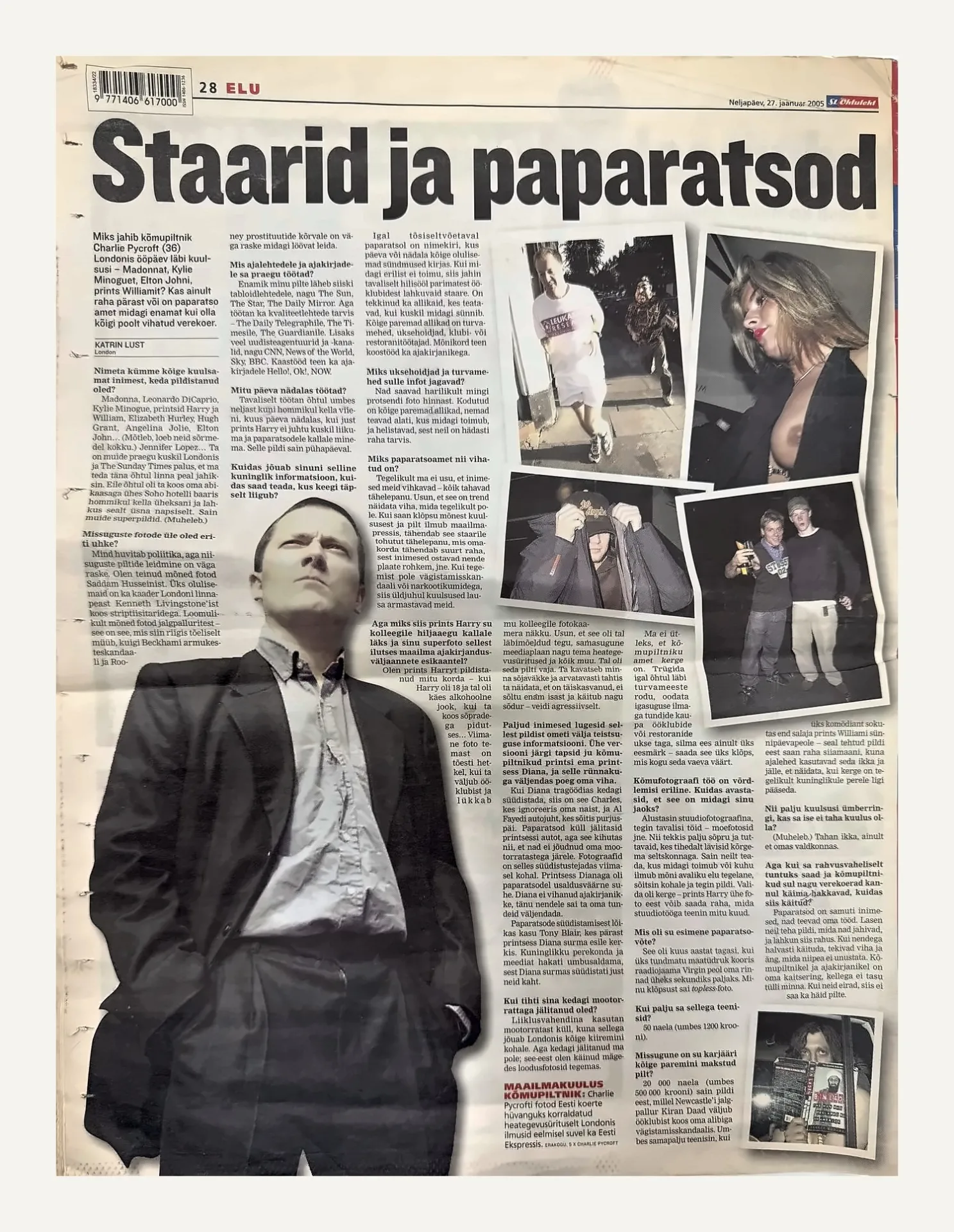
Most of the night was waiting. When the Estonian daily SL Õhtuleht followed my work for a full page on the London trade on 27 January 2005, it set out the reality behind the stereotype: long nights, missed leads, reliance on tip offs, and careful judgement about when not to shoot (Stars and Paparazzi: Inside London's Pre-Social Media Image Economy). As I saw it, rather than constant confrontation, it was high risk freelance journalism, dependent on timing, discretion and market demand.
Then the door opened, and for a few seconds the pavement was the whole job. Mick Jagger came out of The Ivy just after midnight on 17 December 2004 with a Christmas present under his arm, and, going by the timestamps in my files, L'Wren Scott followed fourteen seconds later (Mick Jagger and L'Wren Scott at The Ivy, 2004). Simon Cowell and Piers Morgan walked out of Cipriani on 26 October 2006, and, from my files, all four frames I have were taken within eight seconds (Simon Cowell and Piers Morgan at Cipriani, 2006). Amy Winehouse grinned her way down a London pavement in April 2005, and by my files the whole set took one minute (Amy Winehouse in the Frank years, April 2005).
That was the shape of it: hours of nothing, then seconds that decided the night.
The kit
The craft was in the preparation. Around 2000 or 2001, as I remember it, many of us crossed over from negative film to digital. I have always been a Nikon man, a habit that goes back to Don McCullin, whose Nikon stopped a bullet in 1970. I went through the whole Nikon digital range, from the D1 onwards.
For doorways the settings hardly changed for years. A Sigma 15 to 30mm lens, pre-set at 1.5 metres, because there was no time to focus when someone stepped out of a door. The flash was mounted on a bar at the side, not on top of the camera, so it would not get knocked and broken. My files from The Ivy in 2004 and from Amy Winehouse in 2005 read the same way: Nikon D2H, 15mm, f/7.1, flash fired. At 15mm you were standing very near. Everything was decided before anyone walked out (Zac Efron at 39: one second on a Soho pavement, 2011).
It was a wide, close, flash lit look, and in my view it became the visual language of the 2000s tabloid. If a picture researcher wants that period to look right on screen, that is the look.
When I started in 1999 we still shot on film. I began at Big Pictures, the London agency founded by Darryn Lyons, the Australian photographer who built it into one of the best known names in the trade (Reuters). Lyons and his photographers were later the subject of Paparazzi, a BBC Wales documentary series first shown on BBC One in January 2005 and broadcast again on BBC One in April 2006, which followed the agency's tactics from red carpets to stakeouts (BBC Press Office; BBC One). In my view it was one of the first programmes to show the public how the industry really worked, and it made the job far better known.
In the film years, speed meant the lab. Rolls were rushed in, processed fast and scanned, and the scans were what reached the picture desk. Digital cut out that whole stage. Once we moved over to digital cameras, the pictures were carried on cards or transmitted to the agency as files, and the gap between pressing the shutter and a picture landing on a desk kept shrinking.
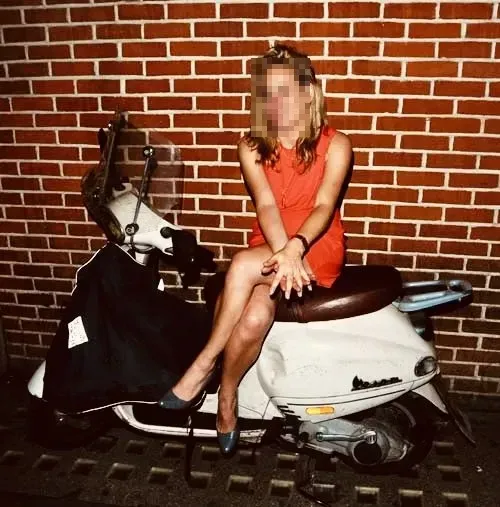
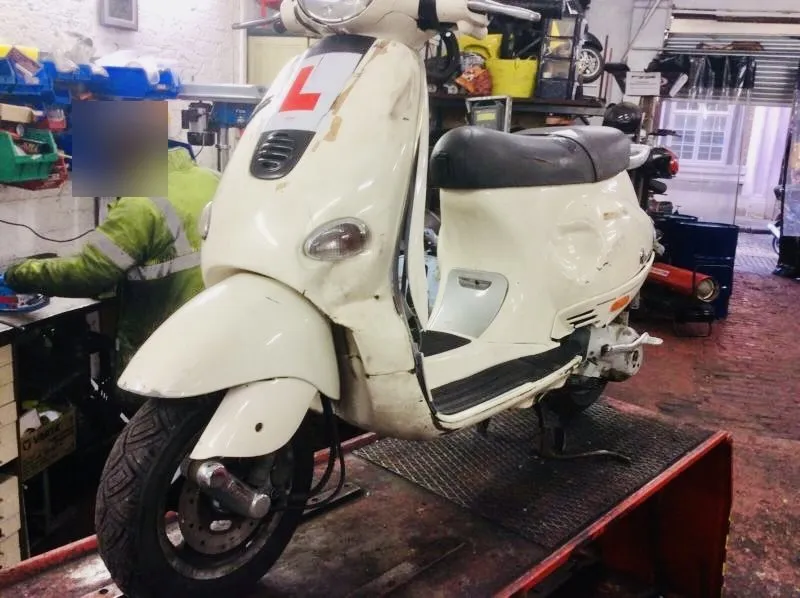
The other piece of kit was the scooter. My Honda SH125 was stolen and later found burnt out in Islington, and I was asked to pay the storage fee for the wreck. I persuaded them to waive it. After that I rode older scooters, and kept them running in the workshop.
The first transition
The changeover began almost as soon as I did. Nikon announced the D1 digital SLR on 15 June 1999 (Nikon; DPReview), the year I started. Within two years, as I remember it, many of us on the pavement had crossed over. The earliest portrait on this site, Malcolm McLaren photographed at dawn in January 2000 for a feature on his challenge to the political establishment, comes from that first transition (Sex Pistols at Dawn: An Early Portrait of Malcolm McLaren). I intend to add more pictures from those first film and digital years to this archive.
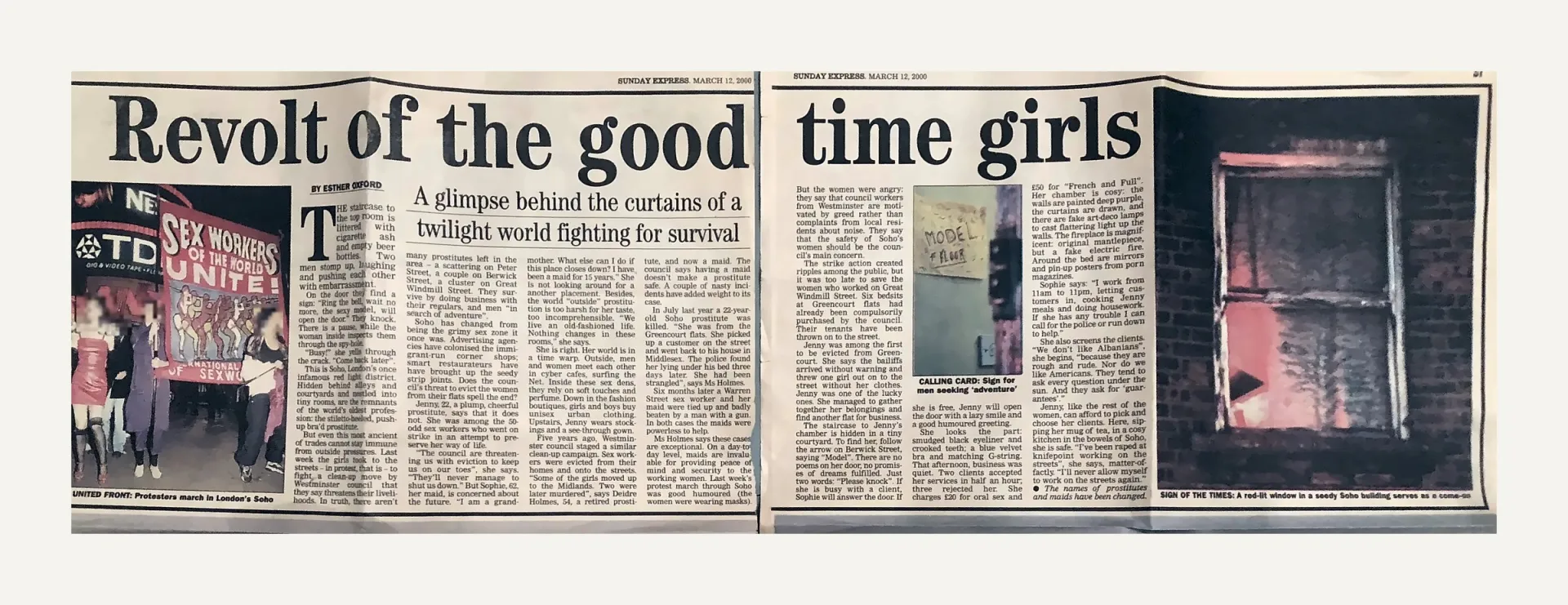
Among the cuttings I kept from those first months is the Sunday Express of 12 March 2000. Its feature on Soho, "Revolt of the good time girls", opened with protesters marching through the West End against a Westminster council clean up.
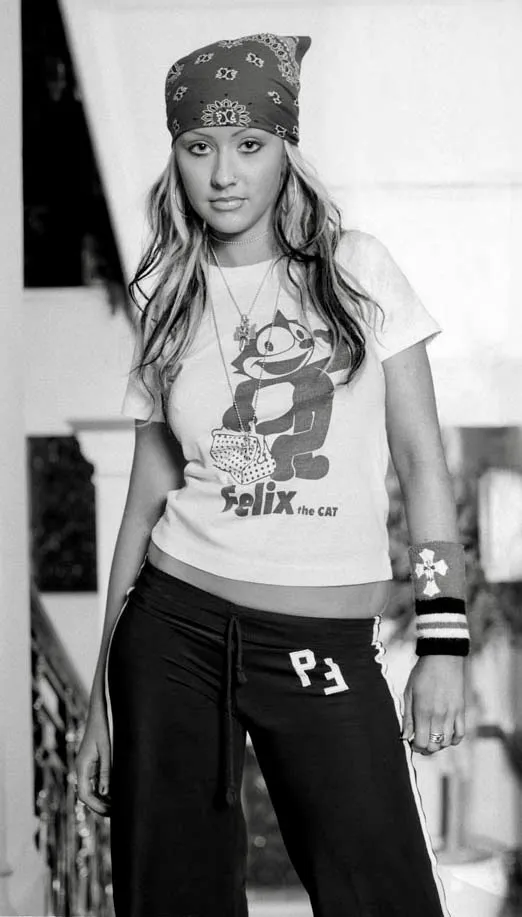
For some of those years I also kept a studio, and I shot portraits on medium format alongside the pavement work. Christina Aguilera at the Mandarin Oriental was one of them.
Creating the story
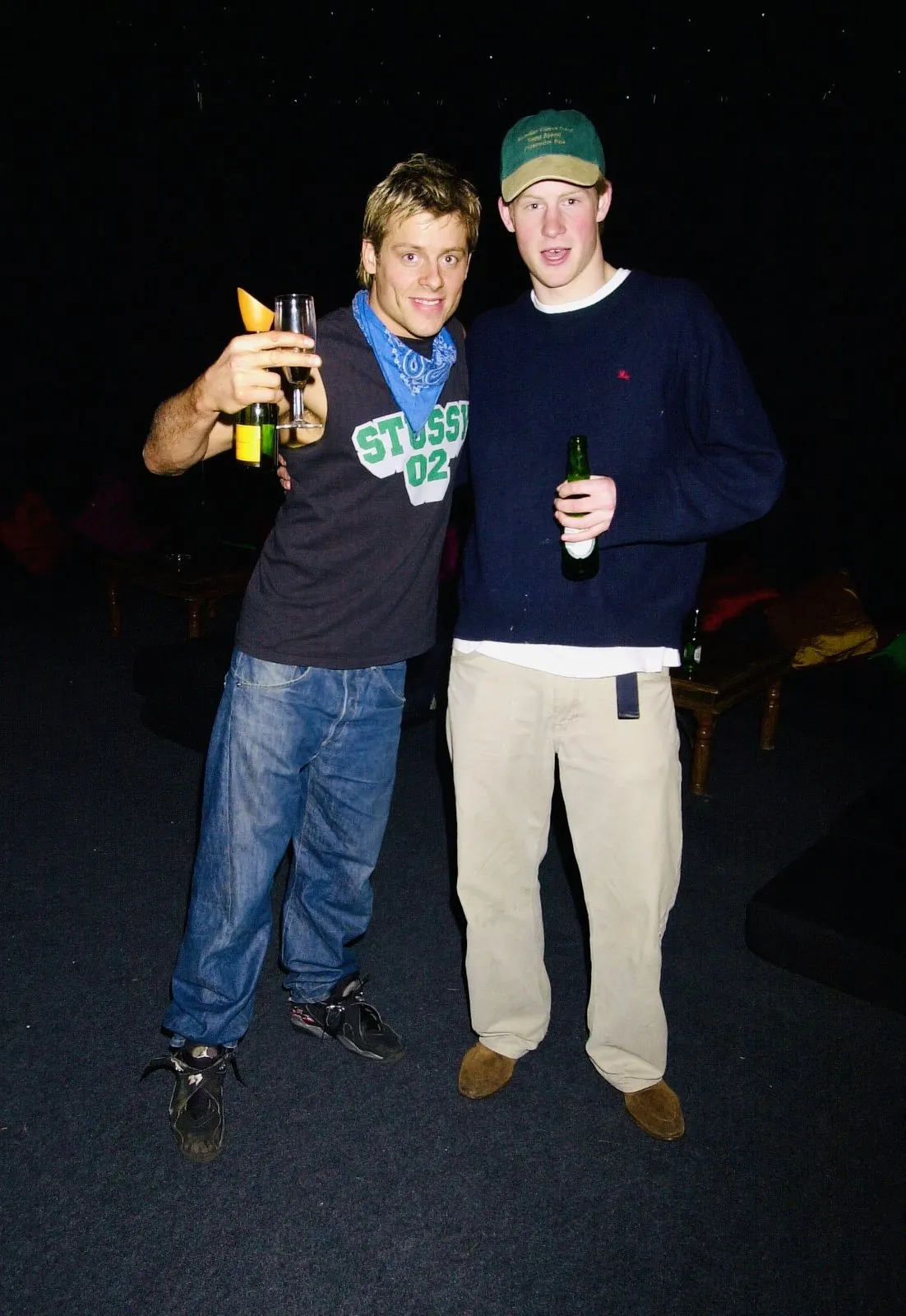
The picture that broke my career open was Prince Harry backstage at a Prince's Trust concert at Berkshire Polo Club in 2003, standing with Darren Hajul of the band Most Wanted, for whom I was doing PR at the time (My first paparazzi break, 2003). It was the moment I found my own formula: not waiting for things to happen, but creating the story.
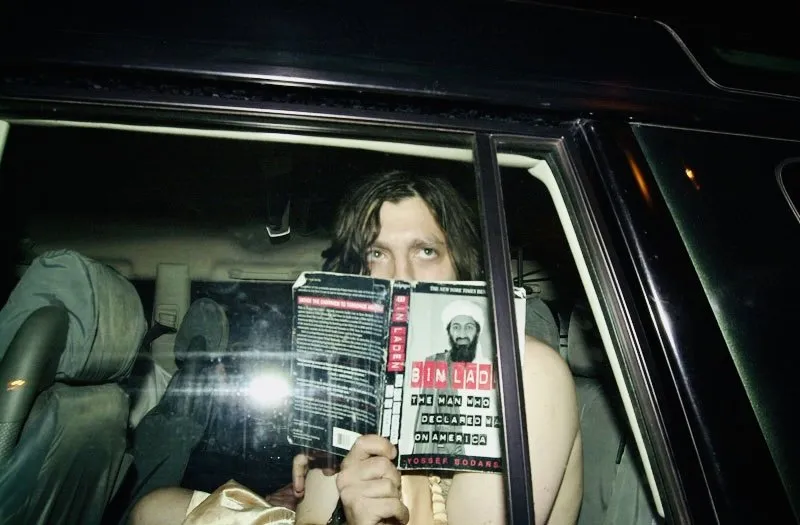
2003 was also my first year breaking stories through Xposure, the London celebrity picture agency David Taylor founded in 2000 (Photo Archive News). My first big story with them came that June. On the night of 21 June 2003 Aaron Barschak got into Prince William's 21st birthday party at Windsor Castle and, the BBC reported, shouted that he was Osama bin Laden. The BBC reported that his father described him as a "comedy terrorist" who wanted publicity before the Edinburgh festival, and that as he was driven away in handcuffs he was seen clutching a book about the al Qaeda leader (BBC News). My frame shows him holding up that book, Yossef Bodansky's Bin Laden: The Man Who Declared War on America.
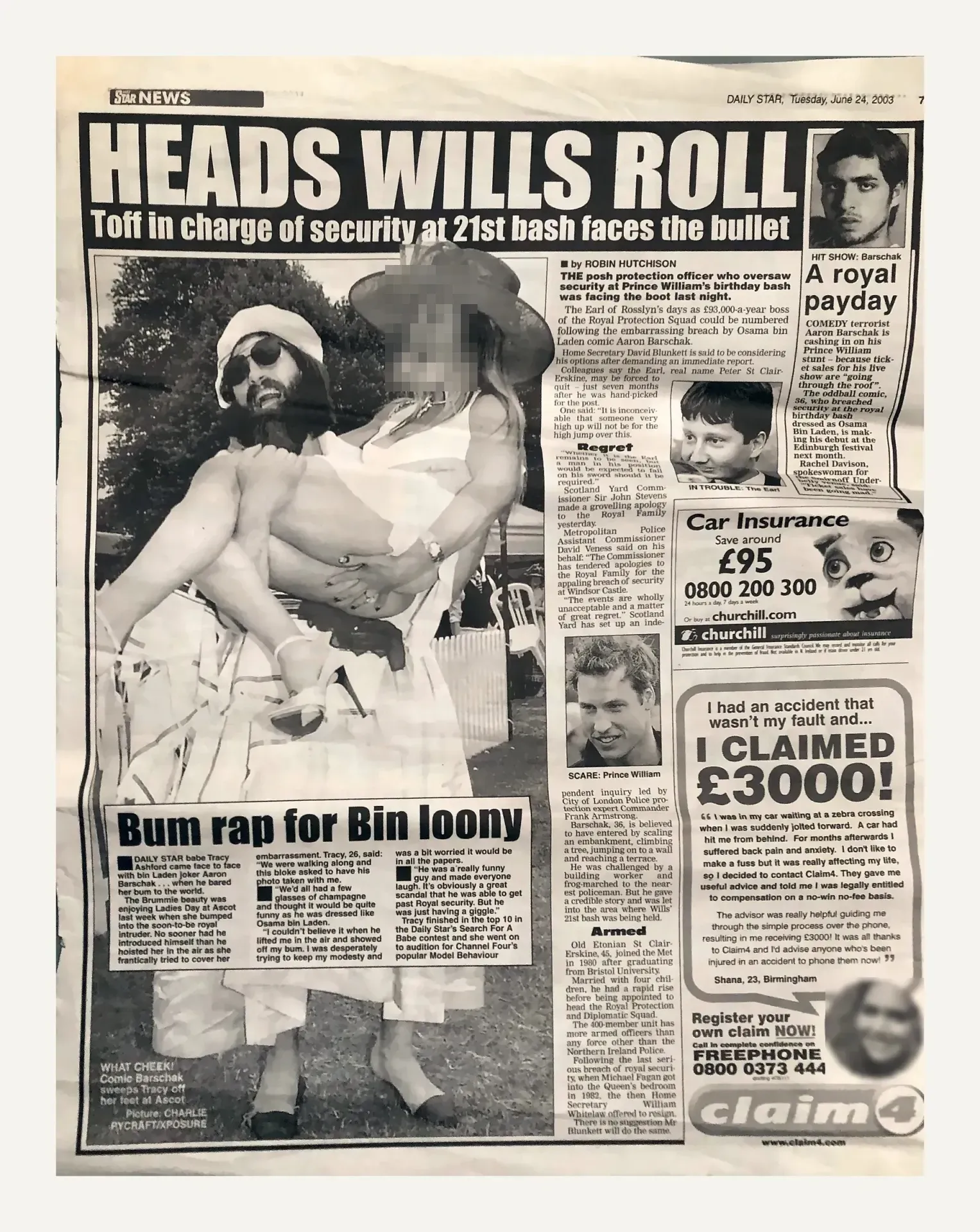
The same week the Daily Star ran another of my frames of him. On 24 June 2003, under the headline "Heads Wills Roll", the paper carried my picture of Barschak at Royal Ascot's Ladies Day the week before, lifting a racegoer off her feet, credited CHARLIE PYCRAFT/XPOSURE.
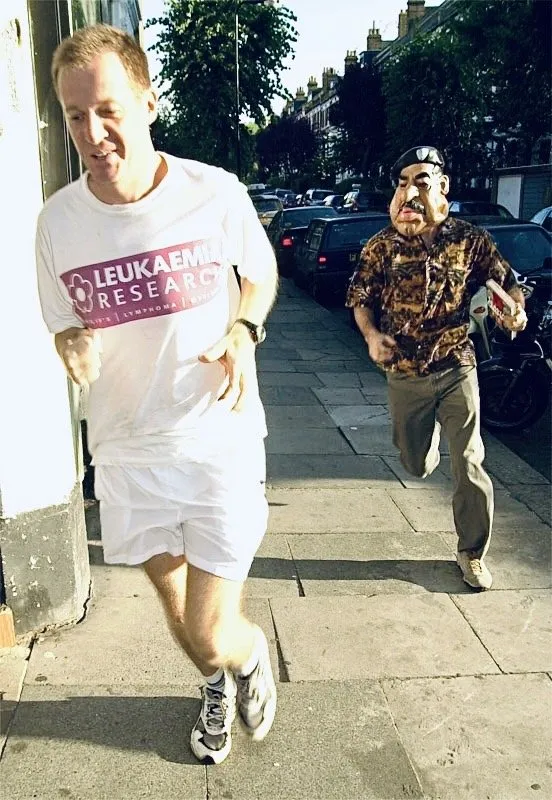
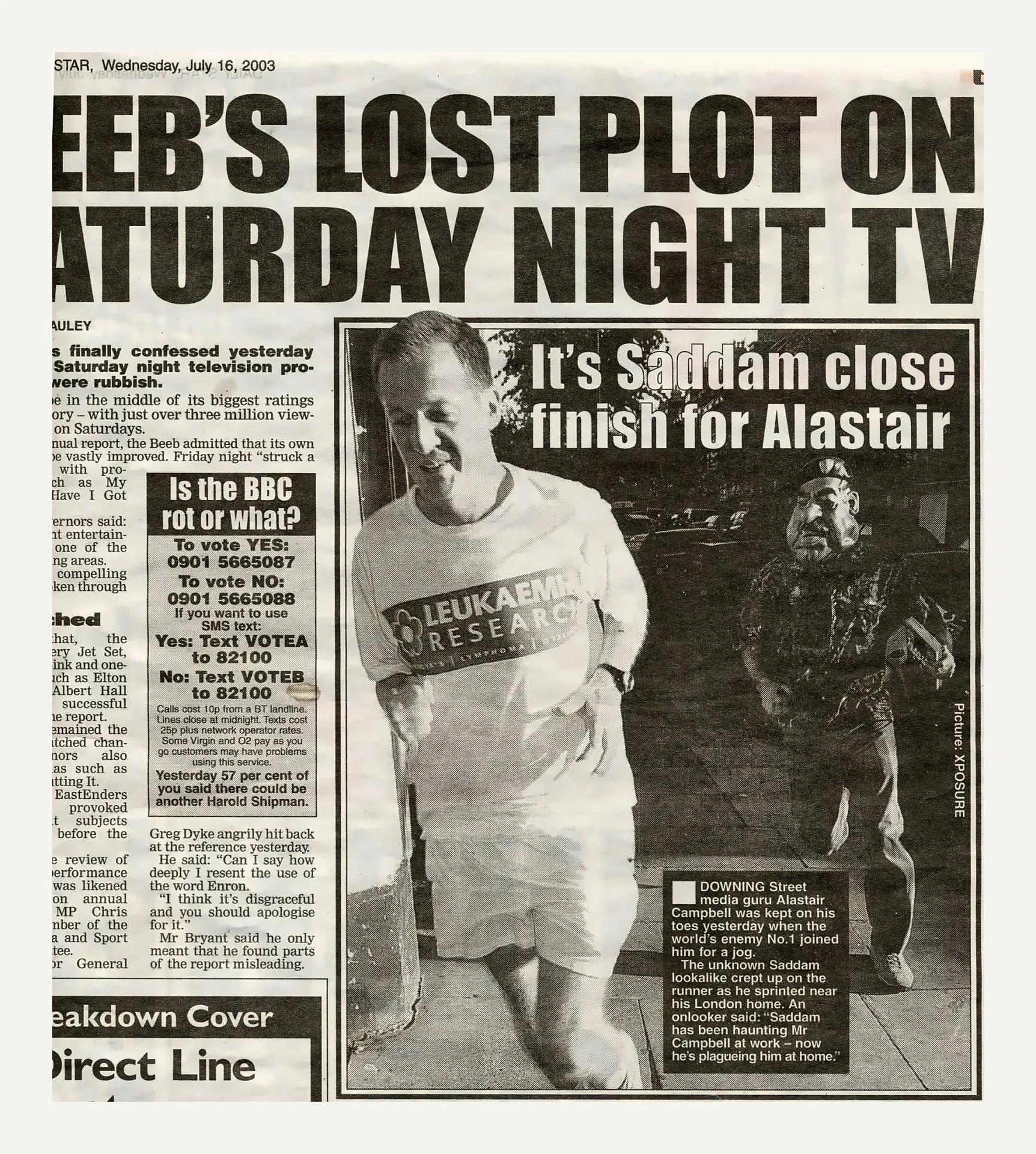
That summer I tried political satire. Alastair Campbell, then the Downing Street communications director, had run the London Marathon in April 2003 for Leukaemia Research (BBC News). In July I set up a satirical picture: a Saddam Hussein lookalike, arranged for the camera, jogging close behind Campbell as he went out running in his Leukaemia Research T-shirt. The Daily Star ran it on 16 July 2003 under the headline "It's Saddam close finish for Alastair", with the picture credited to Xposure.
Creating the story could also mean putting people together. Dynamo, the magician, then just starting out, agreed to a run of arranged photo opportunities, and we photographed him on nights out, showing his tricks and alongside well known faces. The frames here come from two of those nights, in September 2005 and March 2006. In my view, you could put almost anyone together and make a picture sale.
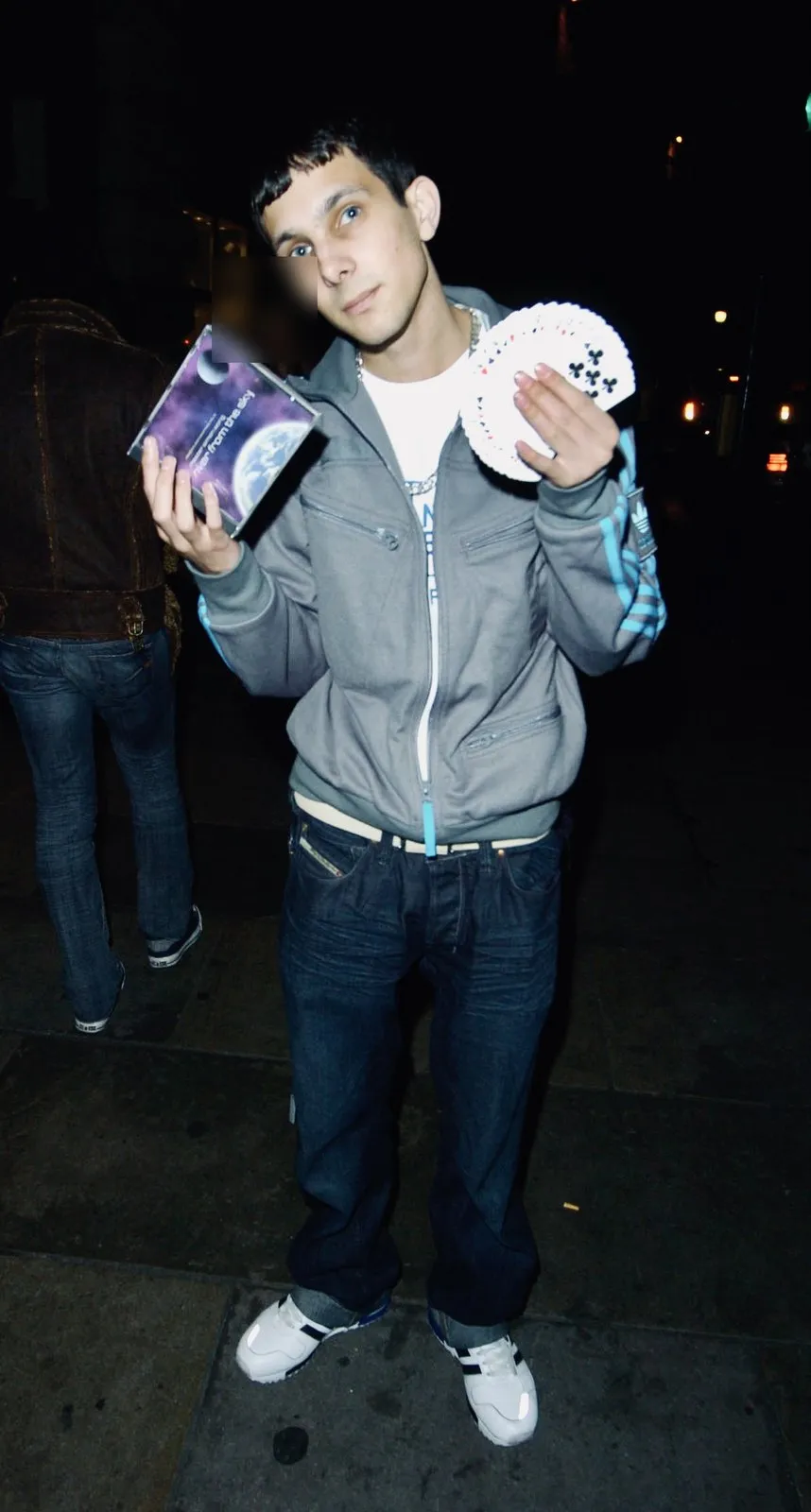
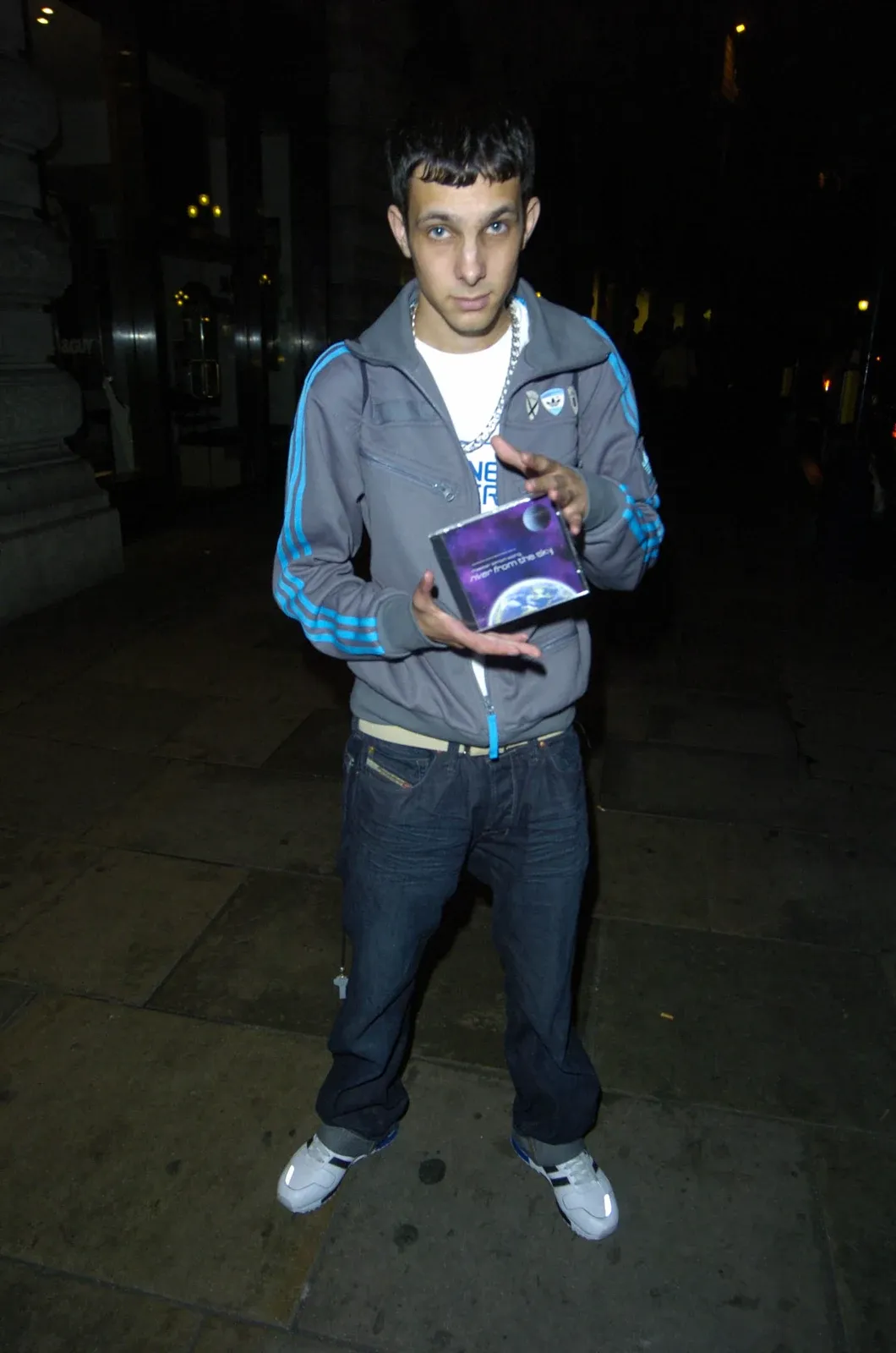
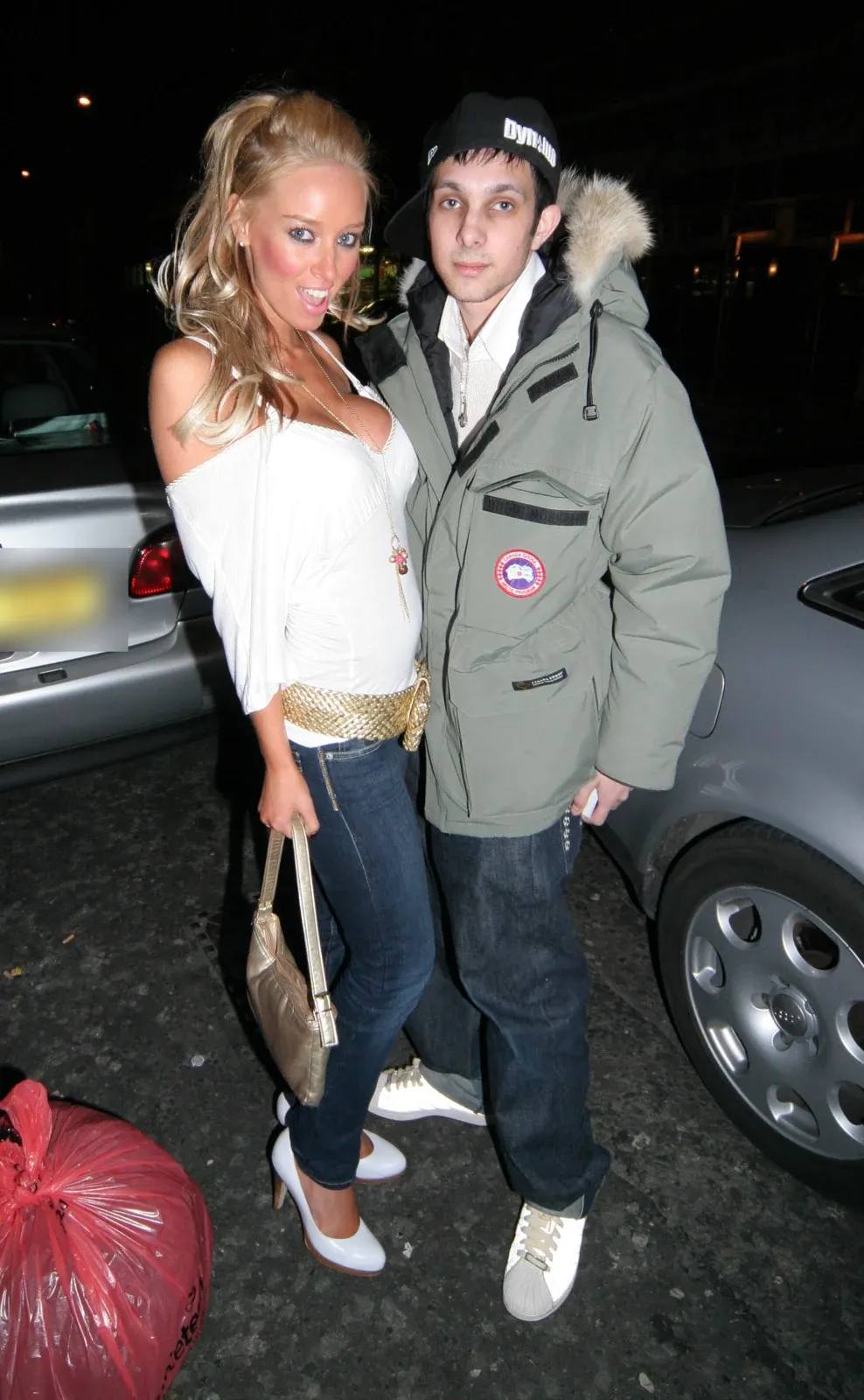
Xposure went on to help build the modern trade. Backgrid, which brought it together with the American agencies AKM-GSI and FameFlynet, was announced in January 2016, and on 1 May 2017 the three agencies dropped their own names and opened under the Backgrid name in the UK and the US (Photo Archive News). Shutterstock completed its acquisition of Backgrid on 1 February 2024 (Shutterstock filing, SEC), and Backgrid is the agency that licenses my archive today.
The scrum
On a quiet night there might be a handful of us. In the heyday it was different. When a high paying name such as the Beckhams left a club, as I remember it, a scrum of 20 or 30 photographers was normal, sometimes more, all fighting for one picture. Afterwards a lot of us left in hot pursuit on Honda SH125i scooters. Most of us wore black North Face jackets. Much of the job was standing around in the dark, making contacts.
My own frames show the scrum from the inside. Outside the Met Bar on Q Awards night, 10 October 2005, Liam Gallagher walked out along the double yellow lines with cameras and flashguns raised all round him (Liam Gallagher outside the Met Bar, 2005). At San Lorenzo in Knightsbridge on 6 December 2005, photographers stood close behind Claudia Winkleman at the Project Catwalk launch (Winkleman, Hurley and the Project Catwalk party night, 2005). When Madonna left her Confessions after-party in Soho in the early hours of 16 November 2005, another photographer's camera was raised behind her as she got into the car (Madonna's Confessions launch night, 2005). Noel Gallagher left the Groucho Club in April 2008 with fans and photographers crowding in (The Gallagher brothers: two nights, four years apart).
The scrum was competitive, but it was also a community. The waits were long and the seconds were frantic, and the same faces shared both. I wrote about one of them, the photographer David Abiaw, in a field note (Remembering David Abiaw). His credits still appear under pictures taken decades ago, and each one is a small reminder that somebody had to be there.
Some nights the scrum closed round a car rather than a doorway. In the early hours of 21 October 2004 Prince Harry left Pangaea nightclub near Piccadilly, and as he got into his car there was a scuffle with the photographer Chris Uncle. Mr Uncle said the prince had lunged at him and that his lip was cut; a royal spokesman said Harry had been hit in the face by a camera and was pushing it away. Scotland Yard said no complaint had been made (BBC News). I was there, and BBC News quoted my account as a witness (BBC News). Two days later Prince Charles's spokesman said no apology to the photographer was required (BBC News).
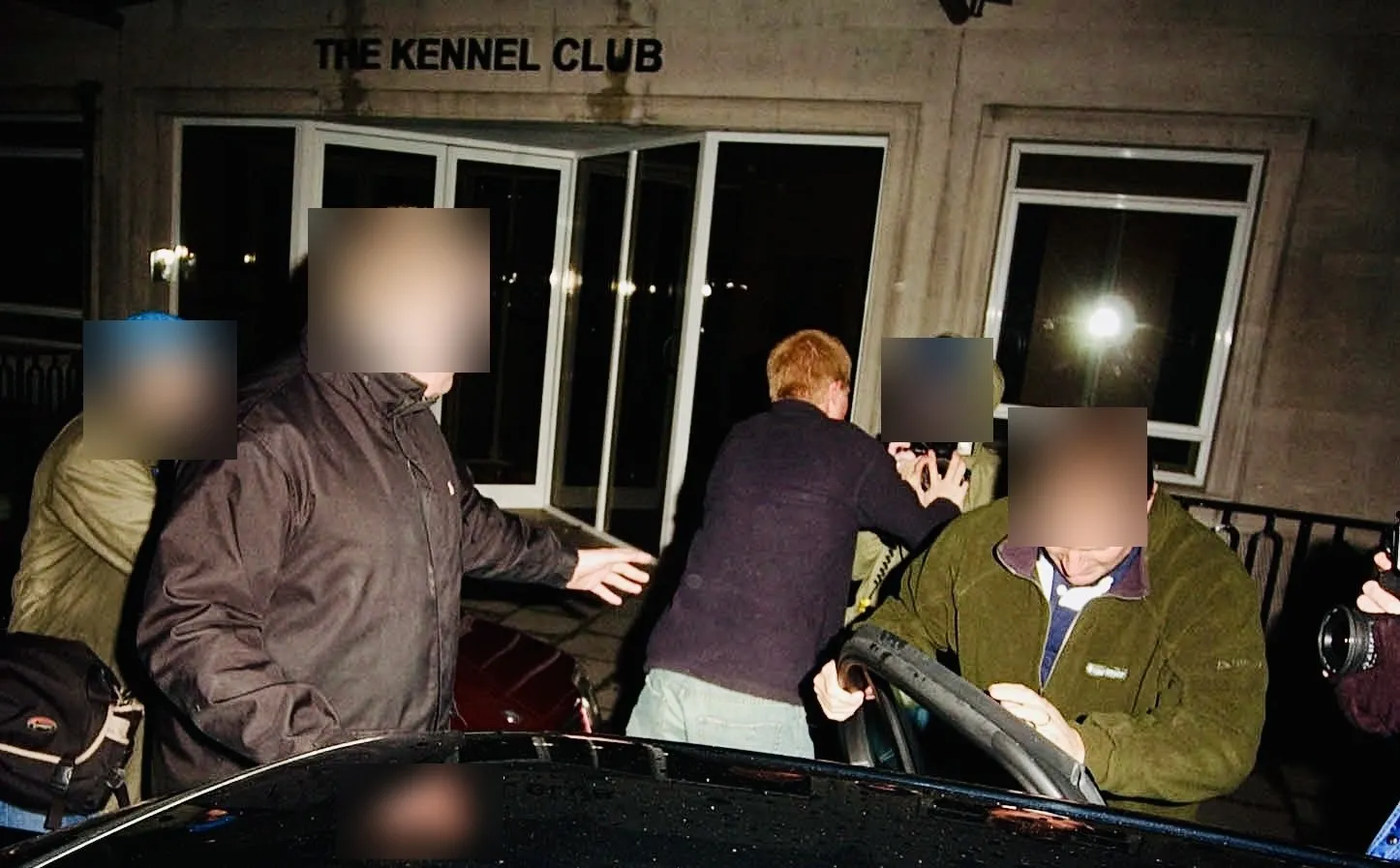
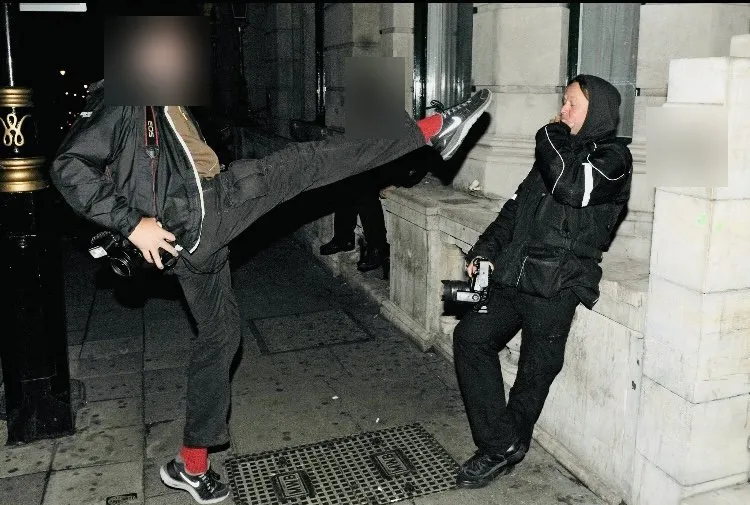
Rivalry and joking went together. One night another photographer struck a pose with his foot raised towards me, and somebody caught the moment.
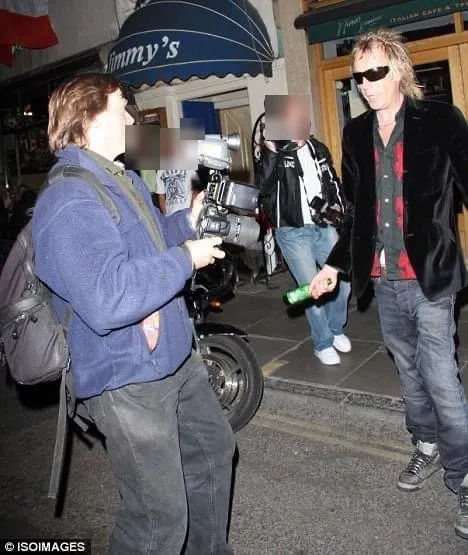
As I remember it, one night outside Jimmy's I came face to face with Rhys Ifans while a cameraman filmed, and a photographer from another agency caught the moment.
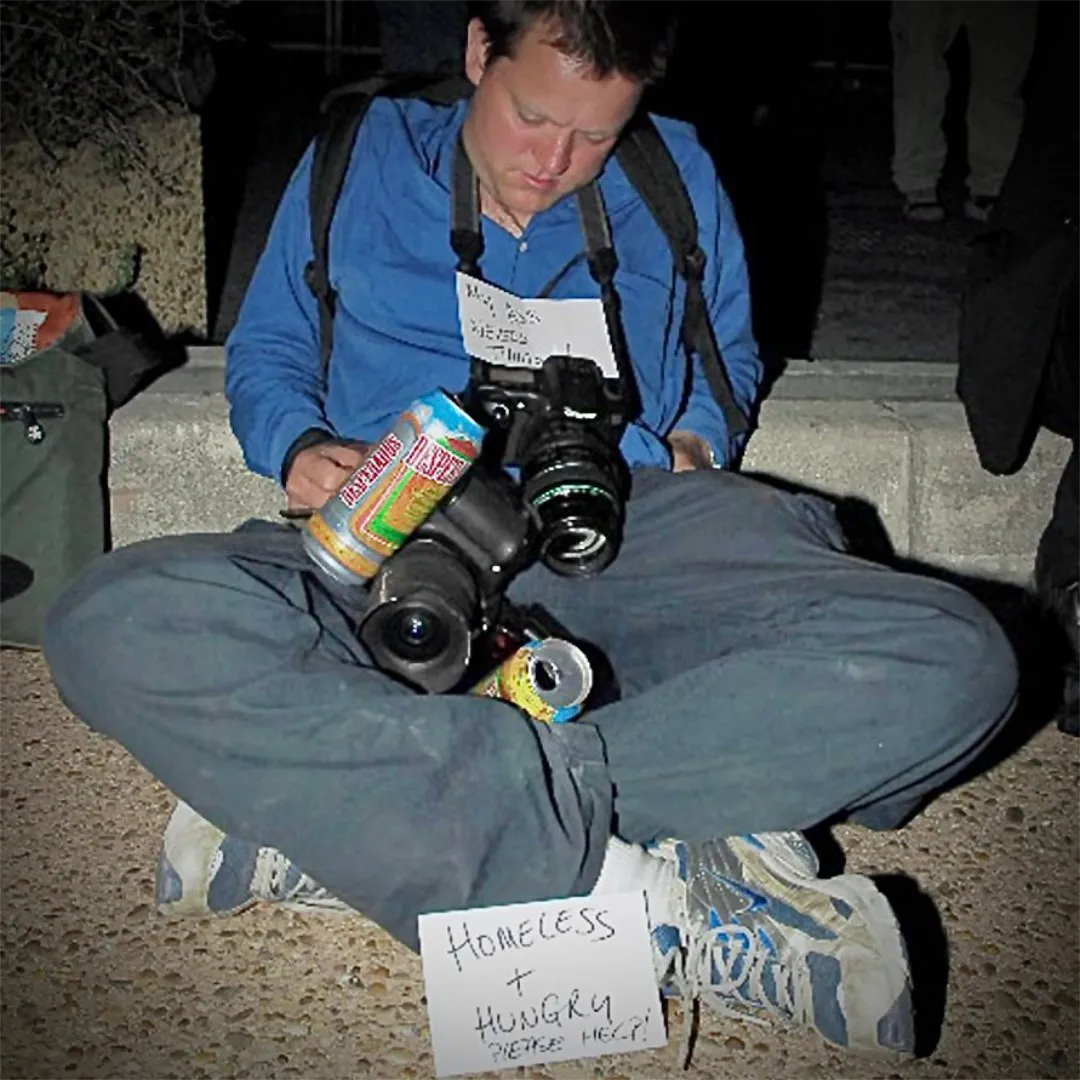
The pack had its own humour too. As I remember it, in Cannes, after one long night, I sat down on the pavement worn out, and the other photographers arranged cans and cameras around me with a sign reading "Homeless + Hungry". It was their joke, and in my view it was also a fair picture of the hours we kept.
The circuit
There was a map in everyone's head, and it moved with the season. In the autumn of 2006 I spent most of my nights outside London's clubs. On 27 September Jay-Z played the Royal Albert Hall with a 25 piece orchestra, and in the early hours he and Beyoncé left the after-party at Movida together in the back of a car. A week earlier Katie Price had walked out of Boujis. On Halloween Björk left the Café Royal in a gold mask (London nights 2006: Jay-Z, Beyoncé and Björk; Halloween in London, 2005 and 2006).
Some stops came round every year. Kelly Osbourne's birthday was one of the pavements I worked three years running, at Sketch, Found and Maya (Kelly Osbourne's London birthday parties, 2005 to 2007). Cipriani was a regular for the Beckhams (Victoria Beckham at Cipriani, 2006) and for Rod Stewart and Penny Lancaster (Rod Stewart in London, 2003 and 2006). Nobu Berkeley St saw George Michael and Elle Macpherson in May 2006 (George Michael and Elle Macpherson at Nobu, 2006) and Elizabeth Hurley with Arun Nayar that March (Elizabeth Hurley in Mayfair, 2005 and 2006). Claridge's gave me Mariah Carey signing autographs on 3 December 2005 (Mariah Carey at Claridge's, 2005).
Premiere and launch nights brought everyone out at once: the Borat afterparty in October 2006 (Borat, 20 years on), Pete Burns outside the Groucho and Movida in 2006 (Pete Burns, ten years on), Amy Winehouse at the Little Noise Sessions that November (Amy Winehouse at the Little Noise Sessions, 2006).
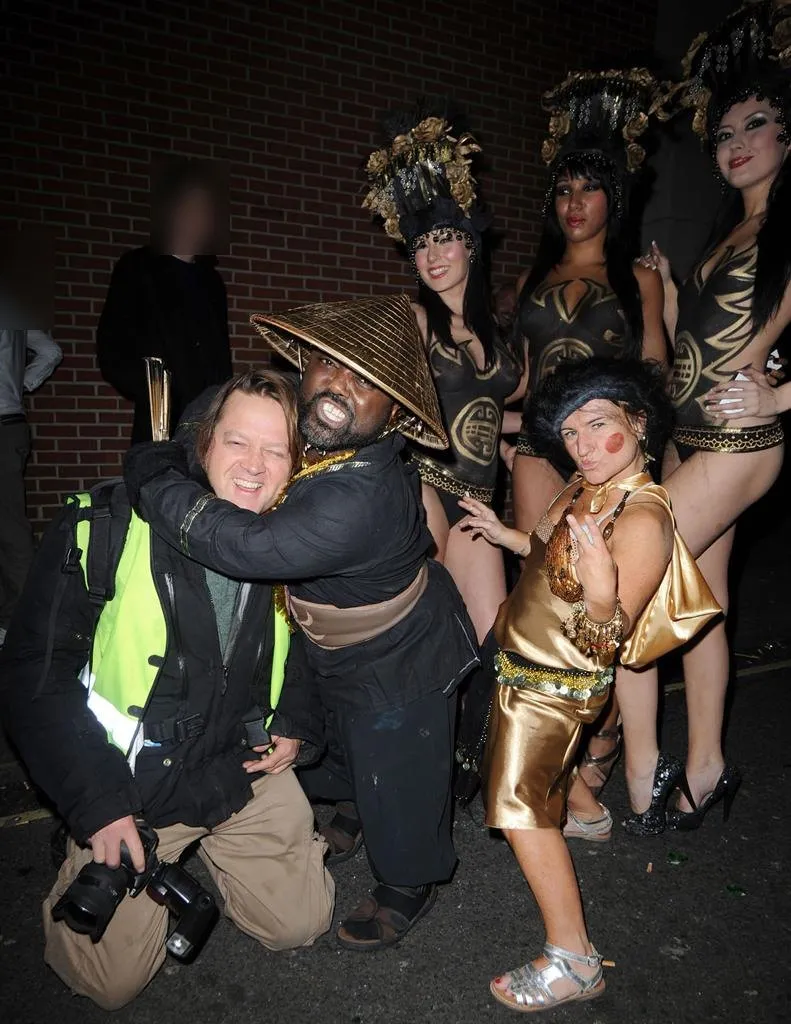
Openings were a spectacle of their own. When Chinawhite reopened in its new home on Winsley Street, near Oxford Street, on 21 October 2009, the opening night came with fire breathers and dancers (Vanity Fair; Getty Images). That night I ended up in the picture myself, crouched with the performers.
The royals
Royal pictures were the top of the market. My first major published break, Prince Harry backstage at Berkshire Polo Club in 2003, showed me that a published picture of a young royal was the kind of break that opened doors on Fleet Street (My first paparazzi break, 2003). The same year I photographed Harry with his hands in the air in the Chinawhite tent. In my view, all aspects of society came together in those heady days.
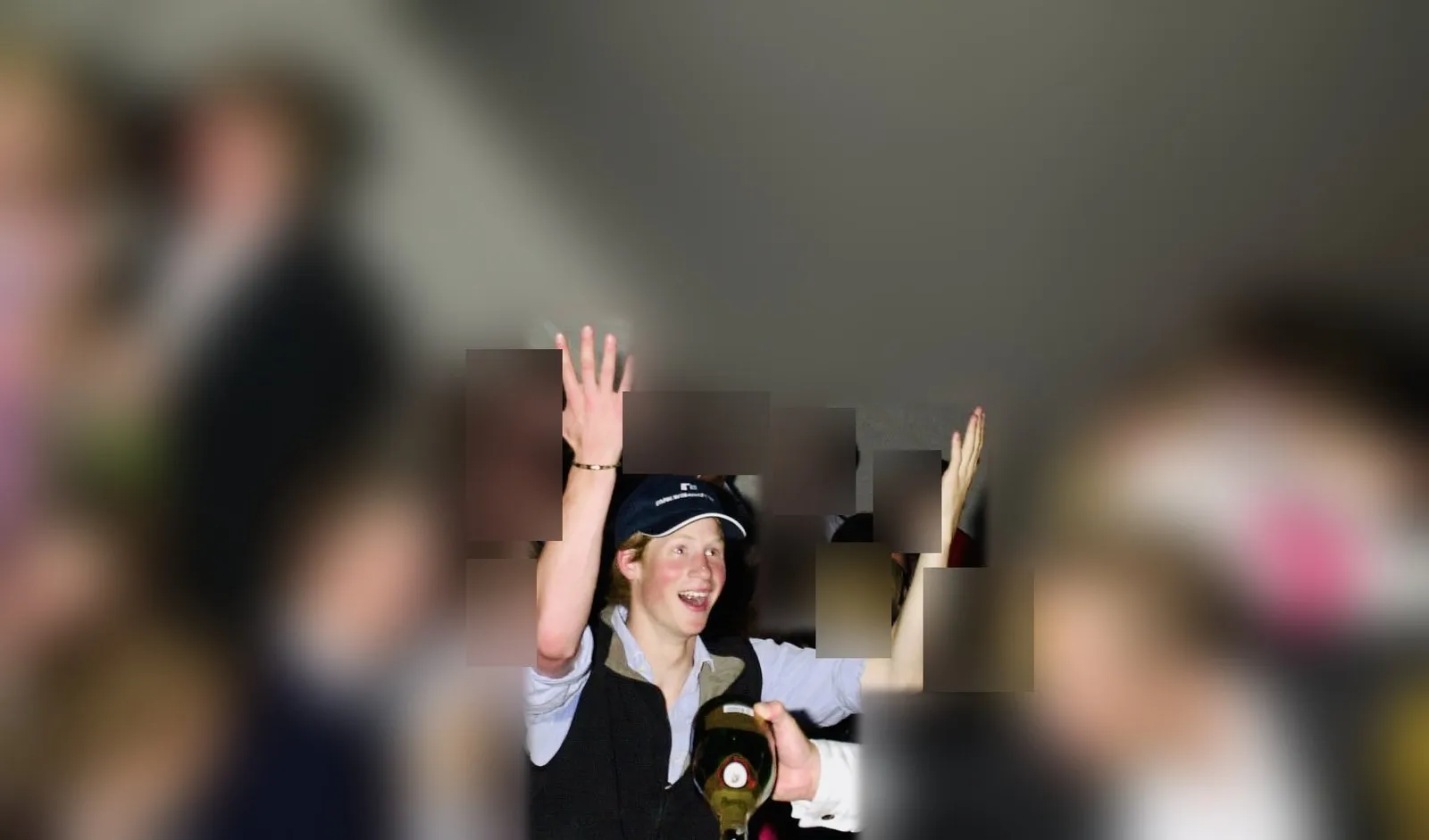
Over the following years I photographed Harry on his nights out, from Pangaea in 2004 to Boujis on 12 December 2007, the same night Kate Middleton was there (Harry's London nights, 2004 to 2007). On Easter Monday 2005 William, Harry and Kate were all at the Sugar Hut in Fulham (William, Harry and Kate at the Sugar Hut, 2005).
The royal story also showed how fast the rules could change. On 9 January 2007, Kate Middleton's 25th birthday, News International announced an editorial policy that its titles, including The Sun and the News of the World, would not use paparazzi photographs of her (The Guardian). That morning, the Guardian reported, she had run a gauntlet of more than 20 press photographers and five television crews outside her London flat (The Guardian). A BBC legal analysis argued that the decision had been driven by the fast developing law on privacy rather than by journalistic altruism (BBC News).
The overnight cover
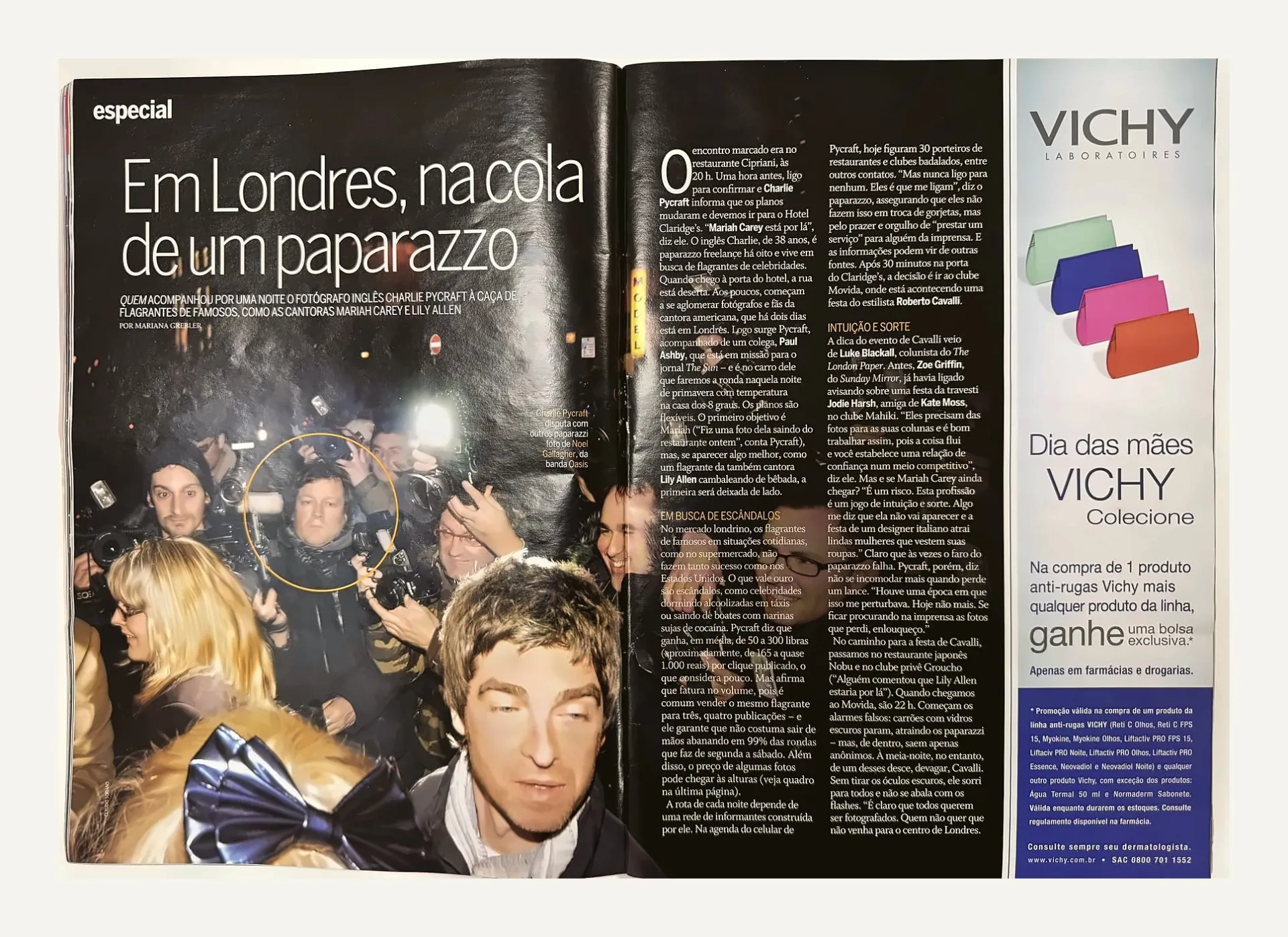
What made the trade work was speed and reach. A single picture could travel the world overnight, not because it was beautiful but because it landed first. London pictures fed magazines far beyond Britain. In Brazil, Quem Acontece published an inside look at the London trade on 25 April 2008, following me through a working night (Inside the Paparazzi Machine: London Nights, Brazilian Covers). It was a global supply chain long before Instagram.
The money followed the single story, and a well known face at a big public event could sell around the world. On 24 July 2005 I photographed Sienna Miller at Cartier International Day at Guards Polo Club in Windsor Great Park (The Telegraph).
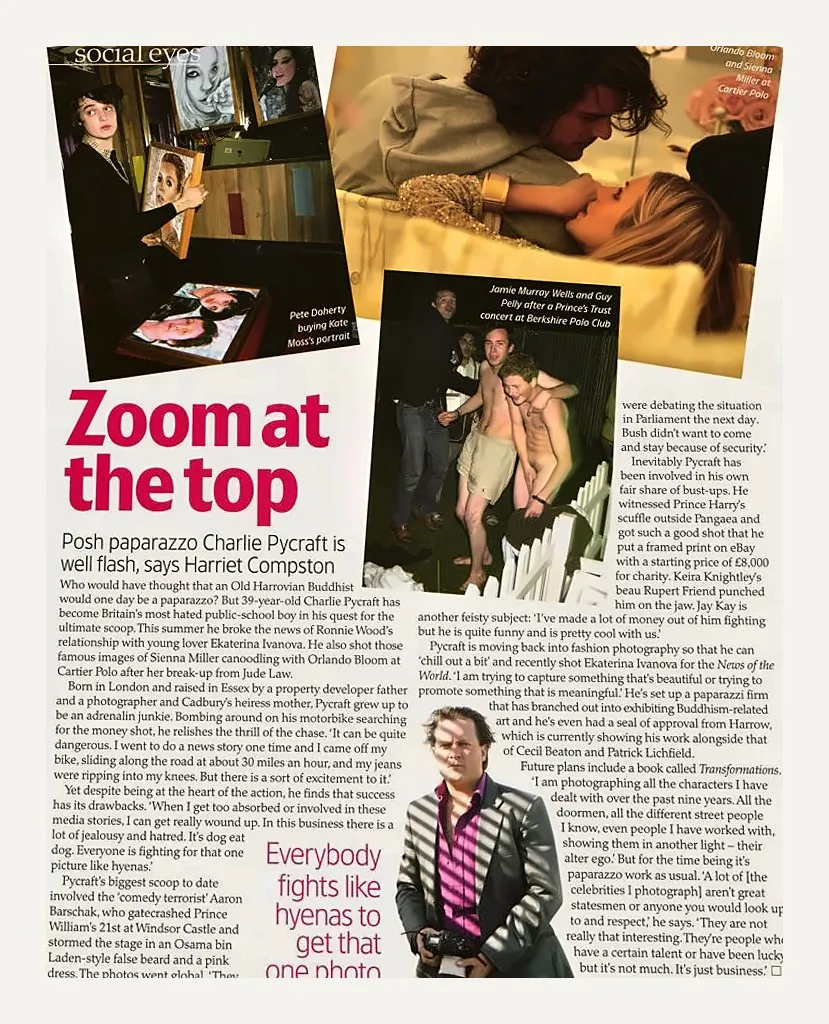
At home, print still decided what mattered. Tatler profiled the trade in December 2008, and its language belonged to the era: speed, access and competitive pressure, framed as glamour rather than risk (Tatler, Flashbulbs, and the Making of a Tabloid Eye). In March 2007 the NUJ's Journalist magazine ran "A Pap's Life", setting the work against arguments about press regulation and the ethics of photographing people on London's pavements at night (A Pap's Life: Inside the 2007 NUJ Debate; Reflective Introduction (2026): Paparazzi, Platforms, and Extraction).
The photographer in the frame
There is an odd side effect of working in a scrum. You end up in other people's pictures. Look at the edges of almost any London night frame from those years and you will find the backs of heads, raised cameras and flashguns, sometimes a face you know. My own frames are full of other photographers, and in the same years other photographers' frames caught me.
Some of those pictures were published. The SL Õhtuleht page in 2005, the NUJ feature in 2007, Quem Acontece in 2008 and the Tatler profile in 2008 all showed the trade from the pavement, and they are reproduced on this site as historical record. For a documentary, those period pictures of the photographers themselves can matter as much as the famous faces: they show who was standing where, what they carried and how close they had to be.
One of those pictures shows me at work. The opening spread of the Quem Acontece feature of 25 April 2008 shows me, Charles Pycraft, ringed in yellow, left of centre, with other photographers in the scrum, cameras and flashguns raised, as Noel Gallagher of Oasis came through the crowd. The magazine's own caption said I was jostling with other paparazzi for a photograph of him (Inside the Paparazzi Machine: London Nights, Brazilian Covers). The feature's writer spent the night with me and my colleague Paul Ashby, who was on assignment for The Sun, and we did the rounds in his car. It is the scrum seen from the other side, with me in it. Two other period pages on this site show me too: the SL Õhtuleht spread of January 2005, and the Tatler profile of December 2008, which pictured me with my camera (Tatler, Flashbulbs, and the Making of a Tabloid Eye).
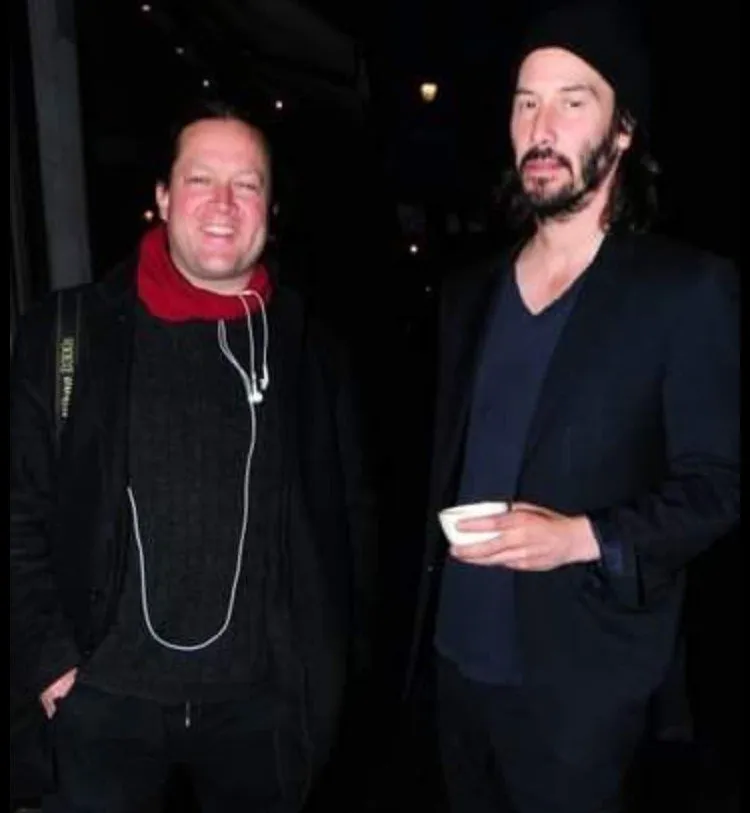
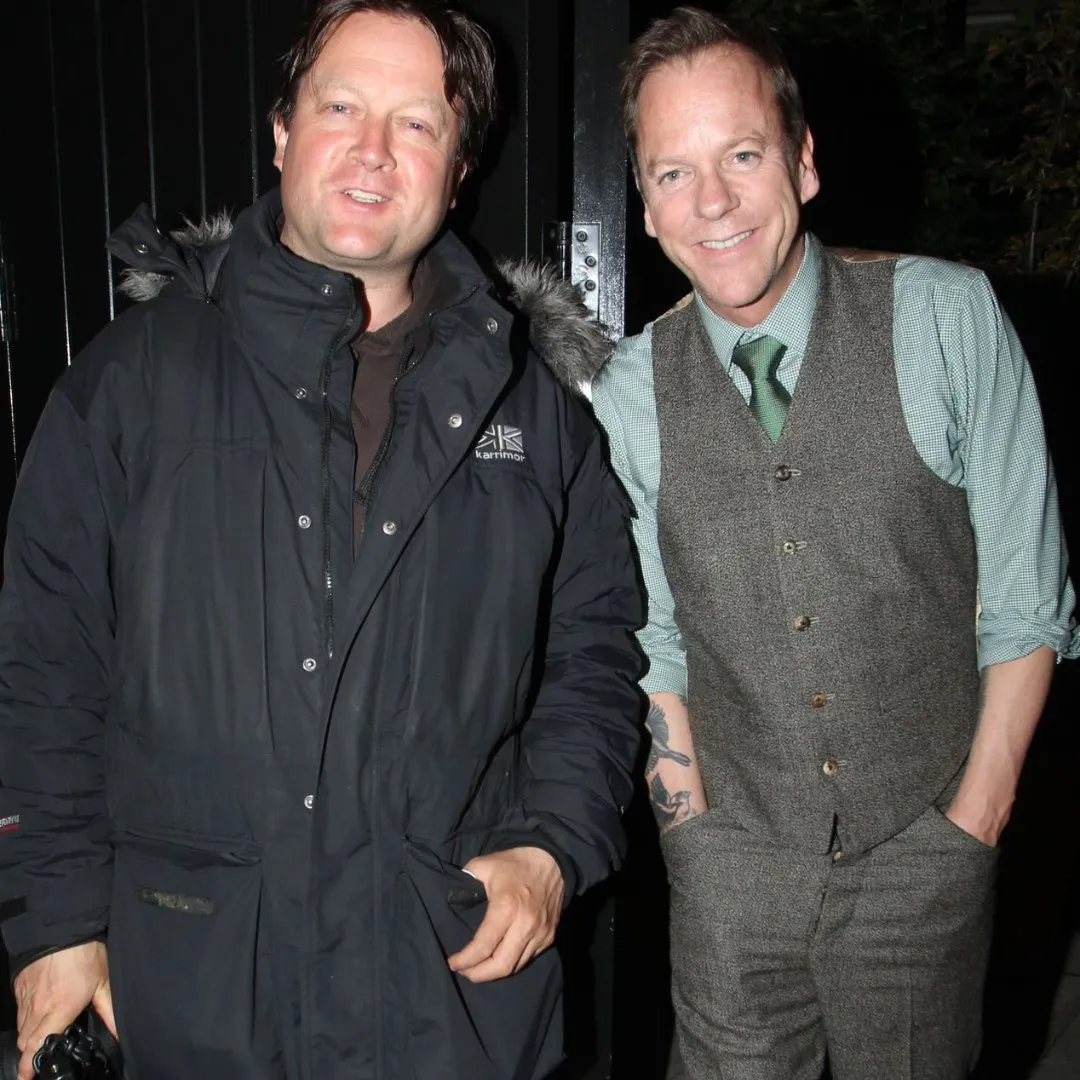
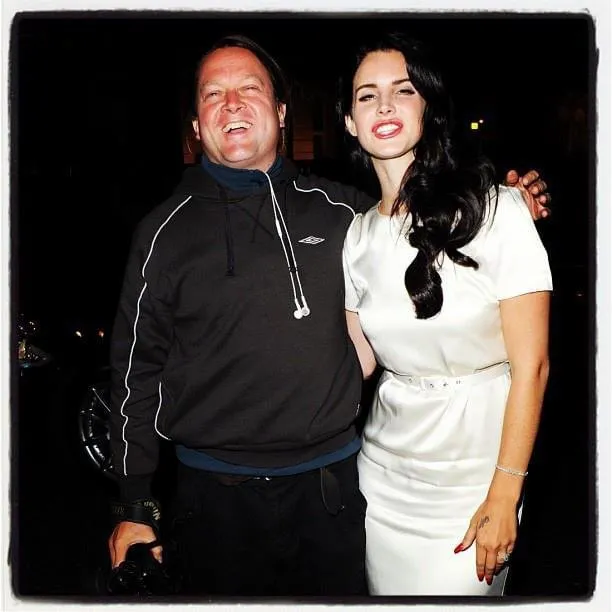
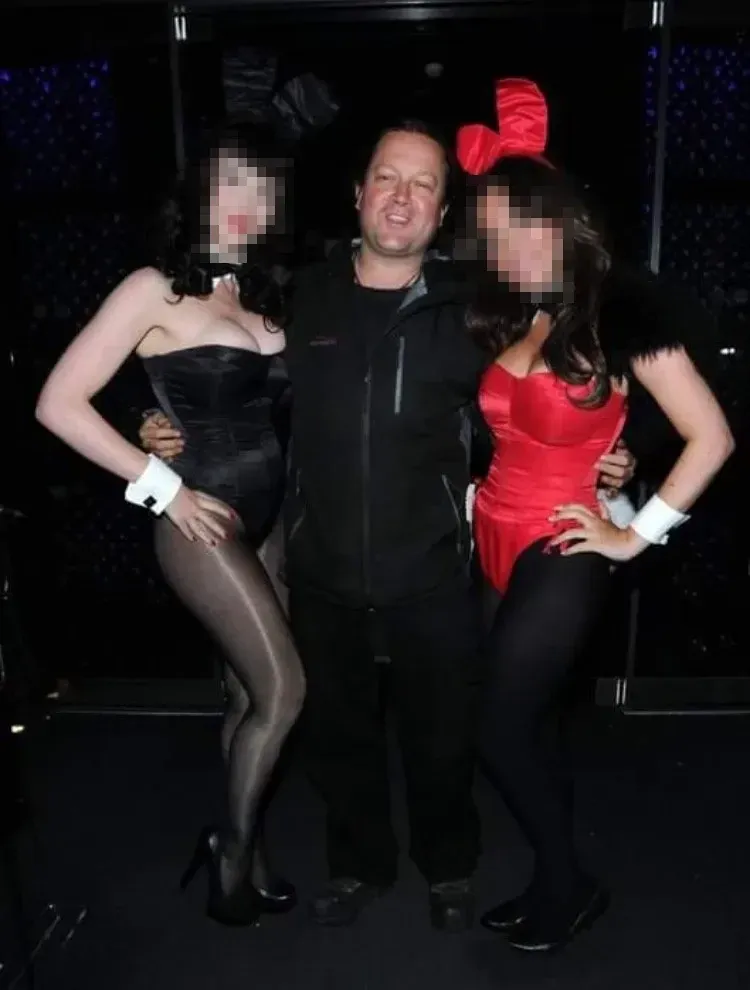
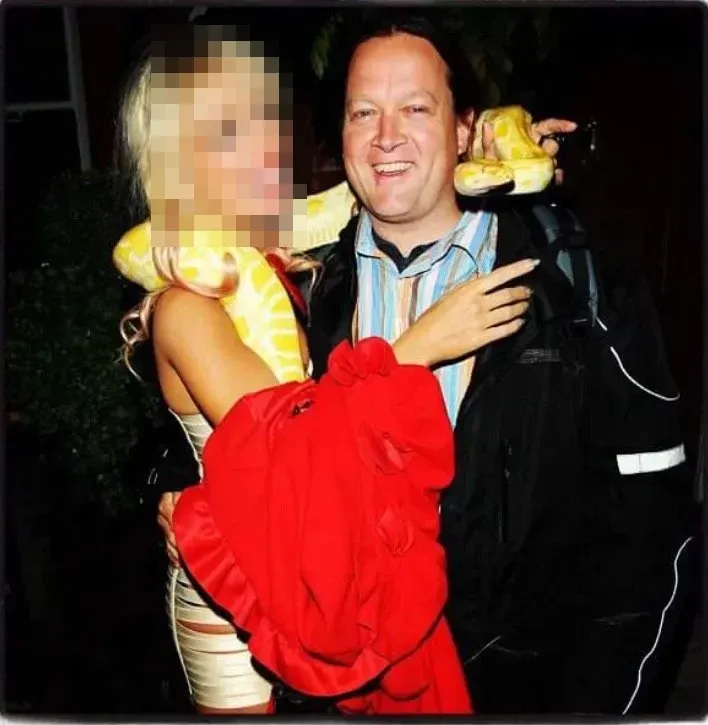
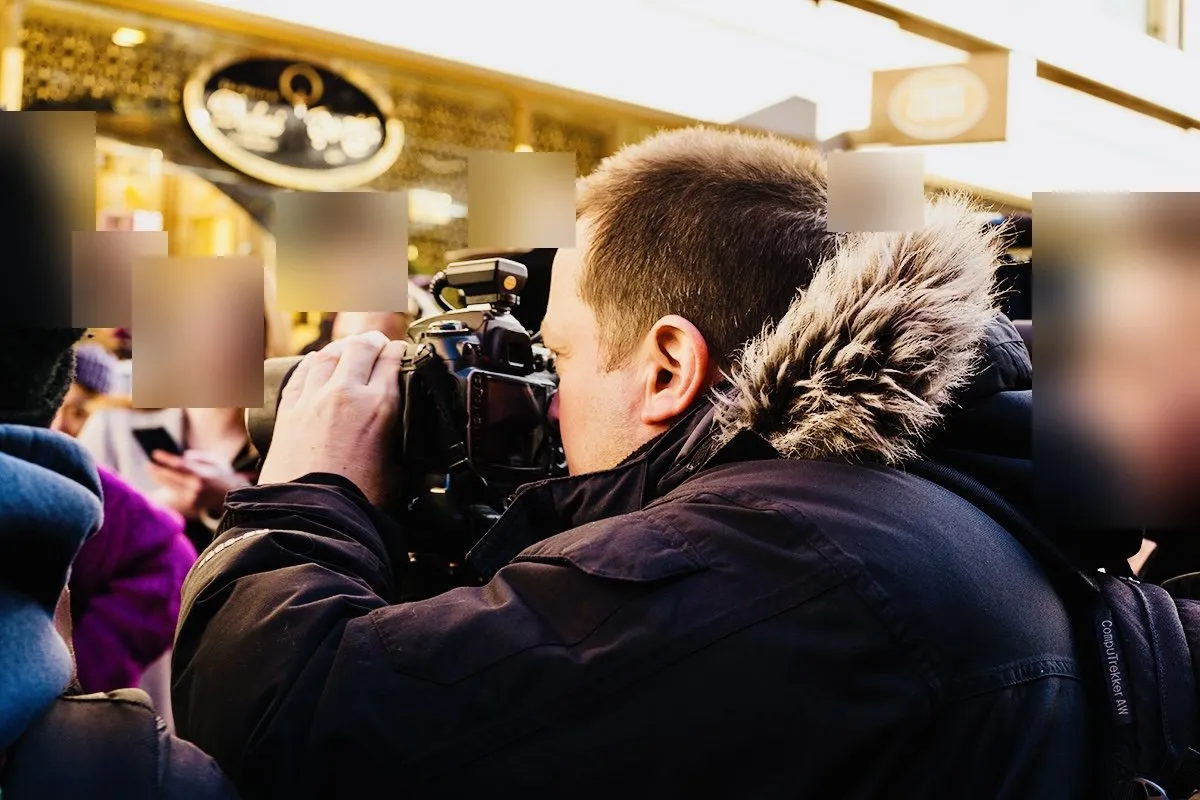
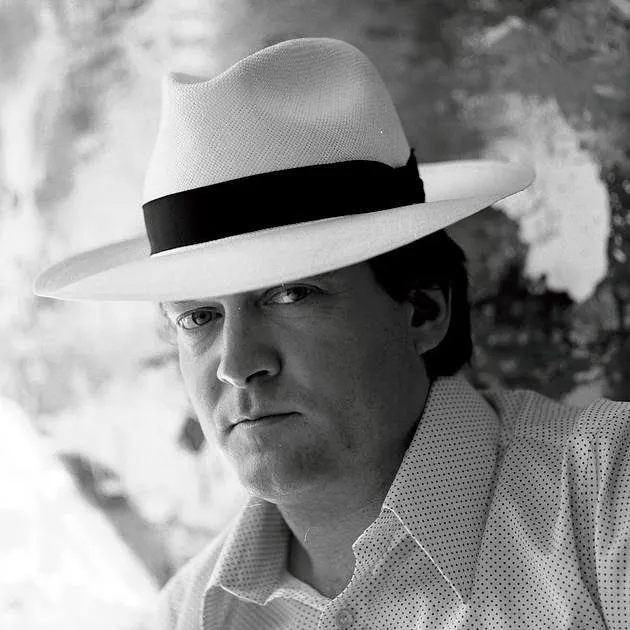
Off the page, other people's cameras caught me too: with Keanu Reeves, with Kiefer Sutherland, with Lana Del Rey, with two event hostesses in bunny costumes, with a woman holding a yellow python, and at work in a crowd in my parka. One portrait, in a Panama hat, was shot for Tatler by Paul Ashby and never used.
This piece began with a face search. When I ran my own face through PimEyes, it turned up other photographers' frames in which I had ended up on the wrong side of the picture. A pap should always be in front of the celebrity. In these I was behind them, a face in the background of someone else's shot: behind Cheryl and Jean-Bernard Fernandez-Versini outside The Library in July 2014 (Daily Mail), and behind Oritse Williams of JLS at the One Direction This Is Us after-party in August 2013 (Irish Mirror). Not my finest positioning, but proof that I was there.
Phones in every pocket
The first crack in the old order came from the public, not from the law. On 7 July 2005, the day of the London bombings, the BBC received 22,000 emails and text messages and 300 photographs from the public. Stills and video from passengers on the Tube led the Six O'Clock News, which the BBC's media correspondent Torin Douglas described as the first time such material had been deemed more newsworthy than the professionals' material (BBC News).
The same change reached the pavements outside the clubs. When SL Õhtuleht wrote about us in January 2005, it described a trade that worked long before smartphones closed the distance (Stars and Paparazzi). The NUJ feature of March 2007 caught the same world just before social media and camera phones changed it for good (A Pap's Life). Agencies began to take pictures from the public too. In its witness statement to the Leveson Inquiry in January 2012, Big Pictures described its Mr Paparazzi.com website, through which members of the public could send in photographs. Separately, the statement said the agency as a whole received about 3,500 pictures a day (Leveson Inquiry evidence).
My own frames recorded the change. In June 2010 fans lined the streets outside the Glee cast's Soho hotel (Glee in London, 2010). That September Kim Kardashian stopped outside the Soho Hotel to sign autographs for fans who appear in my pictures only as hands (Kim Kardashian in London, 2010 and 2012). By the time I photographed Harry Styles in Kensal Green and Soho in 2012 and 2013, the crowd on the pavement was carrying cameras of its own (Harry Styles in London, 2012 and 2013). In my view, once the fans had cameras too, the professional at the door was no longer the only witness, and before long not even the first.
The legal squeeze
The law tightened in step with the technology, and the tightening started before I did. After the death of Diana, Princess of Wales in 1997, the Press Complaints Commission published a new code of practice in December that year, which its chairman Lord Wakeham called "the toughest in Europe". Under it "persistent pursuit" by reporters or photographers was forbidden, long lens photography of people in private without their consent was banned, and the princes were to be left to finish their schooling "without unnecessary intrusion". The same code also forbade intercepting private telephone conversations (BBC News).
The same year Parliament passed the Protection from Harassment Act 1997. Section 3 gave anyone who was harassed a civil claim, with damages and an injunction (legislation.gov.uk). A decade later that civil remedy was being used against photographers and agencies. In November 2008 Sienna Miller's harassment and privacy claims against Big Pictures and Darryn Lyons were settled at the High Court, so the case ended by agreement rather than by a judgment. The Guardian reported damages totalling £53,000 plus costs, that Carter-Ruck had brought the harassment action, and that Big Pictures agreed not to pursue her or doorstep her at home, while pictures at bars, nightclubs, restaurants, in public and on red carpets were still allowed (The Guardian). The BBC reported £37,000 of that for harassment (BBC News; Reuters). In March 2009 Lily Allen, represented by Carter-Ruck, obtained an order under the 1997 Act from Mr Justice Eady. The Guardian reported that the application followed a collision the day before involving her car and a vehicle driven by a photographer. Separately, Big Pictures, Matrix Photos and one individual photographer gave undertakings to the court, which are promises rather than findings against them, and an injunction was granted against other, unnamed paparazzi (The Guardian). In May 2009 Amy Winehouse obtained a High Court injunction, citing the same Act, banning Big Pictures and "persons unknown" from following her, with photographers kept 100 metres from her home (The Guardian).
Privacy law grew alongside it. On 6 May 2004 the House of Lords found for Naomi Campbell against MGN, publisher of the Daily Mirror, and Lord Nicholls said the essence of the claim was "better encapsulated now as misuse of private information" (Campbell v MGN [2004] UKHL 22). Seven weeks later, on 24 June 2004, the European Court of Human Rights found a breach of Article 8 over pictures of Princess Caroline of Hanover in her daily life, and held that the decisive factor was whether published photographs contributed to "a debate of general interest" (Von Hannover v Germany). On 7 May 2008 the Court of Appeal held, in a claim brought on behalf of JK Rowling's young son against Big Pictures over a photograph taken of him in an Edinburgh street, that it was arguable that a child in a public street had a reasonable expectation of privacy (Murray v Big Pictures [2008] EWCA Civ 446). In my view, those three judgments together changed what a picture desk was willing to buy from the street.
Two London firms became closely associated with the new law. In 2011 the Guardian described Keith Schilling of Schillings as "credited with inventing the modern legal concept of privacy, along with rival law firm Carter-Ruck", and said he had "helped to pioneer the privacy injunction" (The Guardian).
Critics argued that the new orders chilled reporting. In October 2009 the Guardian reported that it had been prevented from reporting a parliamentary question tabled by the Labour MP Paul Farrelly about the oil trader Trafigura and its solicitors, Carter-Ruck. MPs from all parties protested, and Carter-Ruck then announced that its clients would no longer oppose reporting of what was said in parliament. Farrelly said the legal bills involved in fighting such cases had "a chilling effect on legitimate investigative journalism" (The Guardian; The Guardian). In May 2011 a committee of judges chaired by Lord Neuberger reported on super-injunctions. In the Guardian's summary, they had in the past been granted "far too readily", and only two had been granted since January 2010, one of them later set aside on appeal (The Guardian; BBC News; Report of the Committee on Super-Injunctions). That same month an anonymised injunction obtained by a footballer was undone by thousands of posts on Twitter and by an MP who named him in the Commons (The Guardian).
The turn
The ground was already shifting when I joined the News of the World as a contractor in July 2008. As I saw it, camera phones were becoming commonplace, social media was beginning to remove the need for intermediaries, pictures escaped instantly, subjects could publish their own stories, and privacy law and injunctions were tightening around the press (Inside the Last Days of the News of the World).
The contract came from a shoot. In July 2008 newspapers reported that the Rolling Stones guitarist Ronnie Wood was in Ireland with Ekaterina Ivanova (The Independent; BBC News). My studio shoot and story with her got me contracted to the News of the World, and the shoot later moved to Corfu for the article (Inside the Last Days of the News of the World).
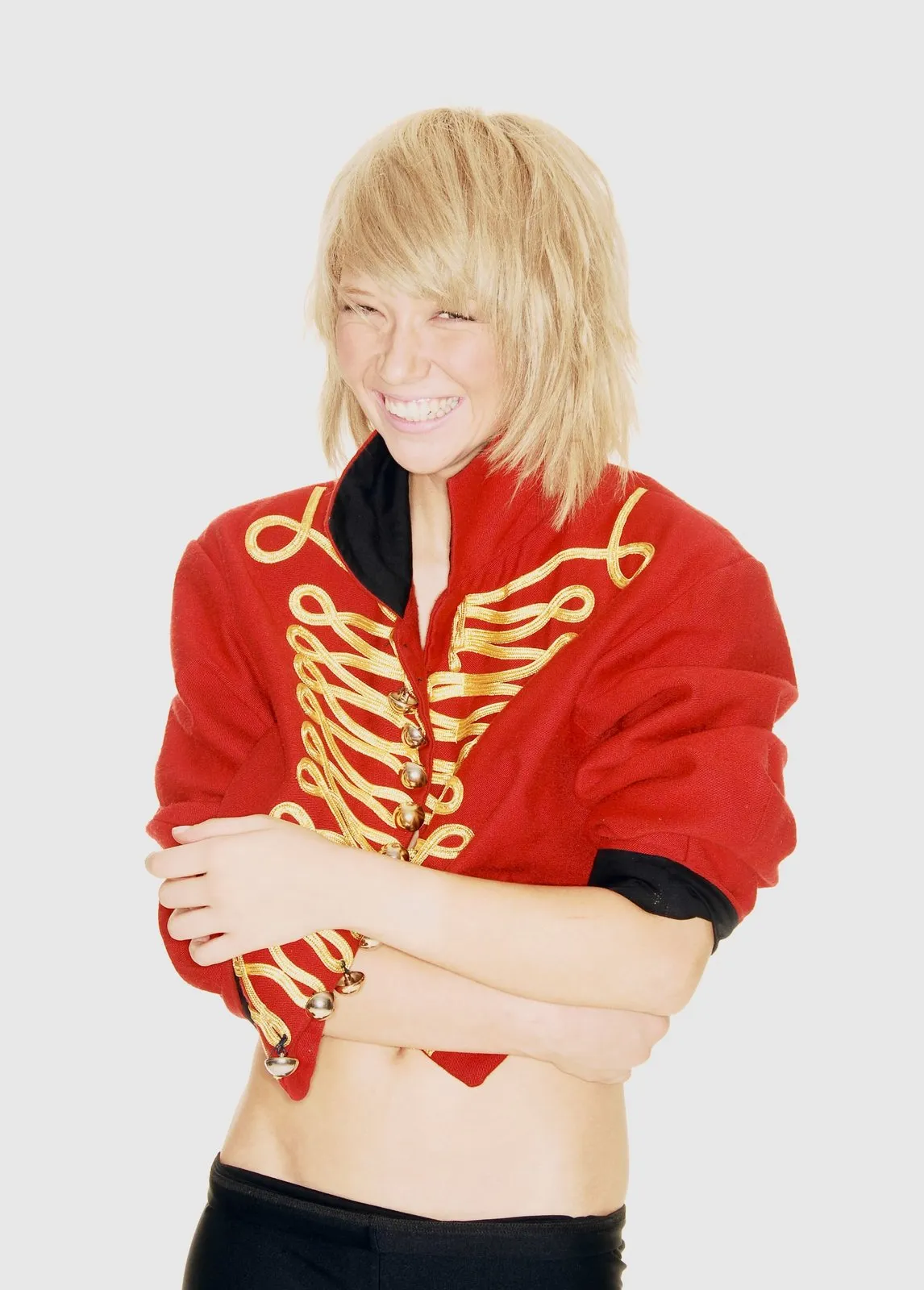
The dates tell the story. The iPhone went on sale in the UK on 9 November 2007 (Apple). Instagram launched on 6 October 2010 (Instagram). By the summer of 2011 Ofcom found that 27 per cent of UK adults and 47 per cent of teenagers owned a smartphone (The Guardian).
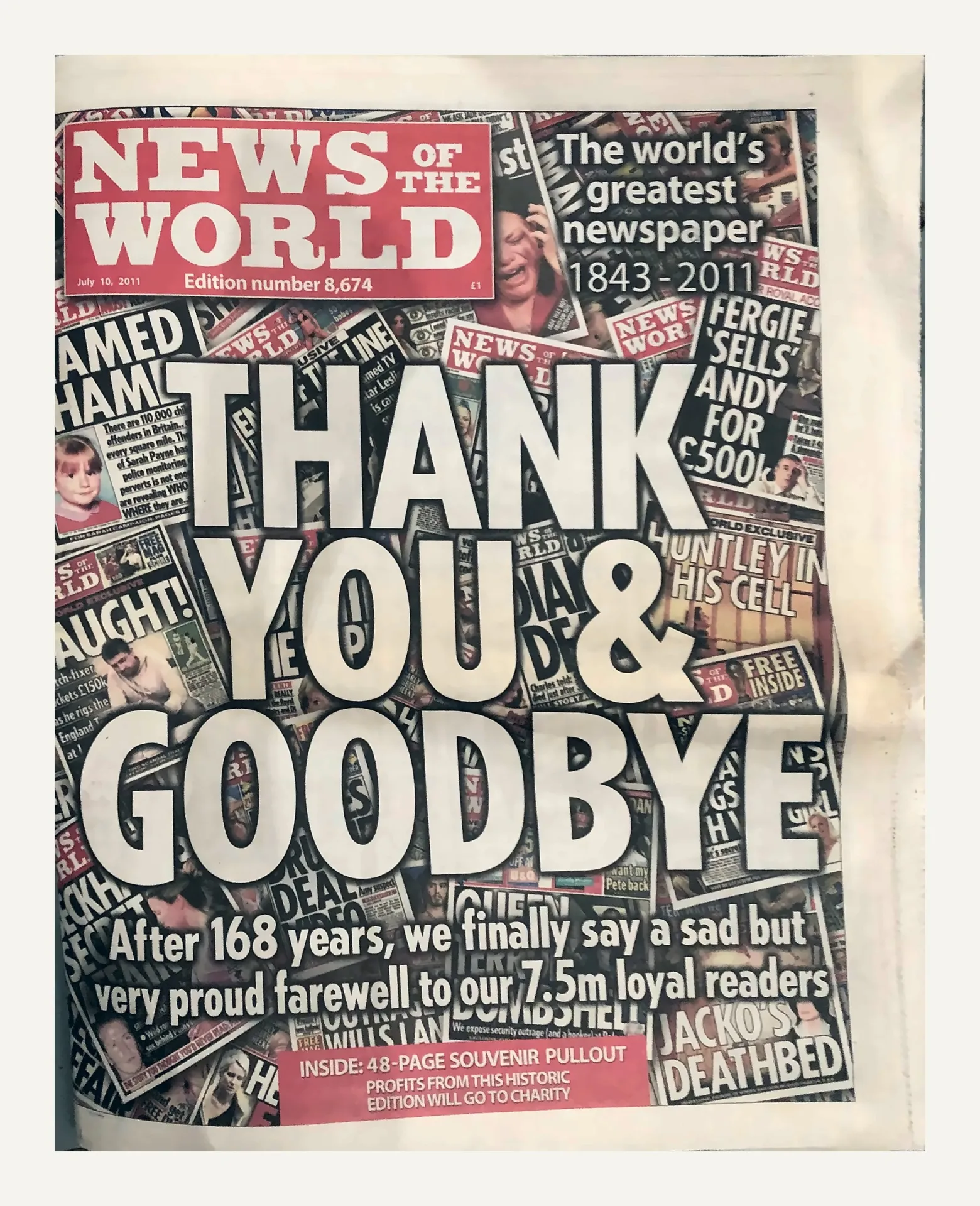
Then the old world closed. The News of the World published its final edition on 10 July 2011, after the phone hacking scandal, and my contract ended with it. On 14 November 2011 Lord Justice Leveson opened his hearings. His report, published on 29 November 2012, said press behaviour had at times been "outrageous" and recommended a new, independent self-regulatory body for the press (GOV.UK; BBC News).
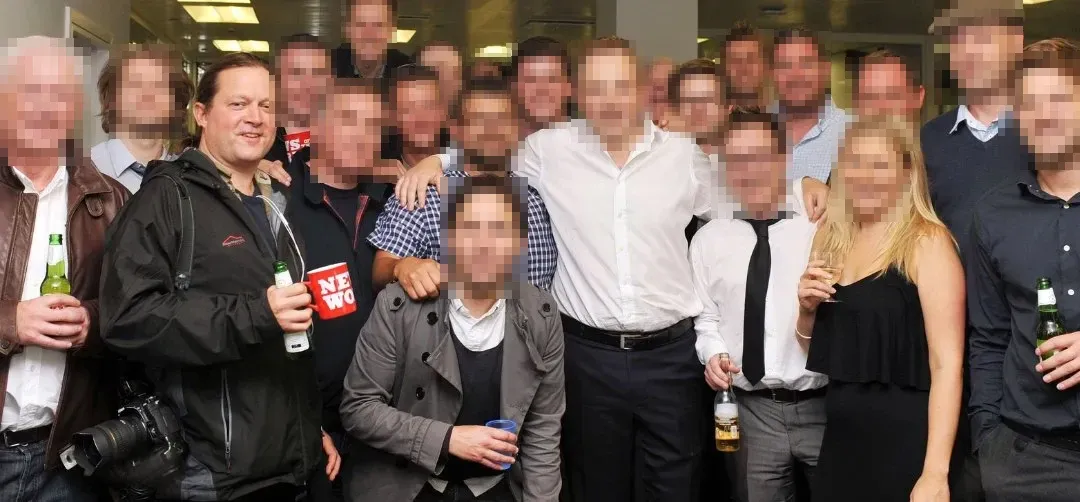
In my view, 2011 was the year the old tabloid world, as we knew it, came to an end. That October I was still on a Soho pavement doing the old job, photographing Zac Efron outside The Box. It was a quiet night. I now see it as the last stretch of an era.
Hacking, Leveson and the paparazzi
Phone hacking, not photography, closed the News of the World. The BBC reported that the last edition of the 168 year old paper, published on 10 July 2011, carried an apology for the hacking of phones under the front page headline "Thank you & goodbye" (BBC News). The irony was not lost on me: the 1997 code that banned persistent pursuit had also banned intercepting private phone calls.
Yet when the Leveson Inquiry heard its first week of evidence in November 2011, the Guardian wrote that the paparazzi were "the recurring villains in the minds of the celebrities and victims who gave the bulk of the evidence". The paper reported Sienna Miller's words to the inquiry as: "Take away their cameras, and you've got a pack of men chasing a woman." It also reported that JK Rowling had described running after a photographer while pushing a pram (The Guardian). Big Pictures and Darryn Lyons gave the inquiry a witness statement on 25 January 2012, setting out how Big Pictures worked, saying it had no code of practice document of its own and that its photographers were told what was expected of them on the basis of PCC recommendations (Leveson Inquiry evidence). In my view, the photographers became the public face of a scandal that had begun with phones.
The paparazzi on screen
My trade was named by the cinema. In Federico Fellini's La Dolce Vita (1960) the news photographer who goes everywhere with the journalist hero is called Paparazzo, and the BBC traces the English word to that character, with Time magazine helping to launch the plural, paparazzi, in English in 1961 (BBC News). BBC Culture notes that the character was based on the Roman photographer Tazio Secchiaroli (BBC Culture).
In my years the screen version of the job was rarely kind. Paparazzi (2004), produced by Mel Gibson and directed by Paul Abascal, starred Cole Hauser as a film star who turns on the photographers pursuing him. Variety called it a "revenge melodrama" that depicted celebrity photographers "as degenerate monsters" (Variety; Los Angeles Times). A few months later, in January 2005, BBC One showed the BBC Wales series Paparazzi about Big Pictures, which I described above.
Dirt, the FX drama, began on 2 January 2007 with Courteney Cox as the editor of a celebrity tabloid. Its last episode aired on 13 April 2008, and FX cancelled it after two seasons (Variety). London Boulevard (2010), William Monahan's first film as director, cast Keira Knightley as Charlotte, a reclusive film star in a Holland Park house with paparazzi outside the gates, and Colin Farrell as the former prisoner hired to help her (Variety; The Guardian). Nightcrawler (2014), written and directed by Dan Gilroy, was not about paparazzi but about their close cousins, the freelance "nightcrawlers" who film crime and crashes in Los Angeles to sell to television news, with Jake Gyllenhaal as Lou Bloom (The Guardian).
In my view, the screen told the public we were predators. The reality on the pavement was usually far duller: cold, long waits, and a few seconds of work.
The pyrrhic victory
In my view, the privacy cases and injunctions of those years were real victories for the people who won them, but many were soon overtaken by events. The courts could stop an agency following an actress home. They could not stop millions of people with phones in their pockets, or the famous from publishing their own lives. In 2011 the Guardian described injunctions being "destroyed by a combination of old and new forces": parliamentary privilege, and "thousands of tweeters" beyond the reach of British judges (The Guardian). Instagram, launched in October 2010, gave every famous person a picture desk of their own. As I wrote in my reflective introduction, smartphones and platform economies made everyone both subject and source (Reflective Introduction (2026)). In my view, the exposure the law had tried to limit on the pavement grew far larger once people began publishing their own lives.
Now there is a new wave. Pictures of real people can be made without a camera at all. In January 2025 the government said it would make creating sexually explicit deepfakes without consent a criminal offence, alongside existing offences of sharing intimate images without consent (GOV.UK). Section 138 of the Data (Use and Access) Act 2025 added offences of creating, or requesting the creation of, a purported intimate image of an adult without consent to the Sexual Offences Act 2003, and they came into force on 6 February 2026 (legislation.gov.uk; SI 2026/31). In my view, that is the last irony of my archival period: a picture that was really taken, on a real night, by someone who was really there, now matters more as evidence than ever.
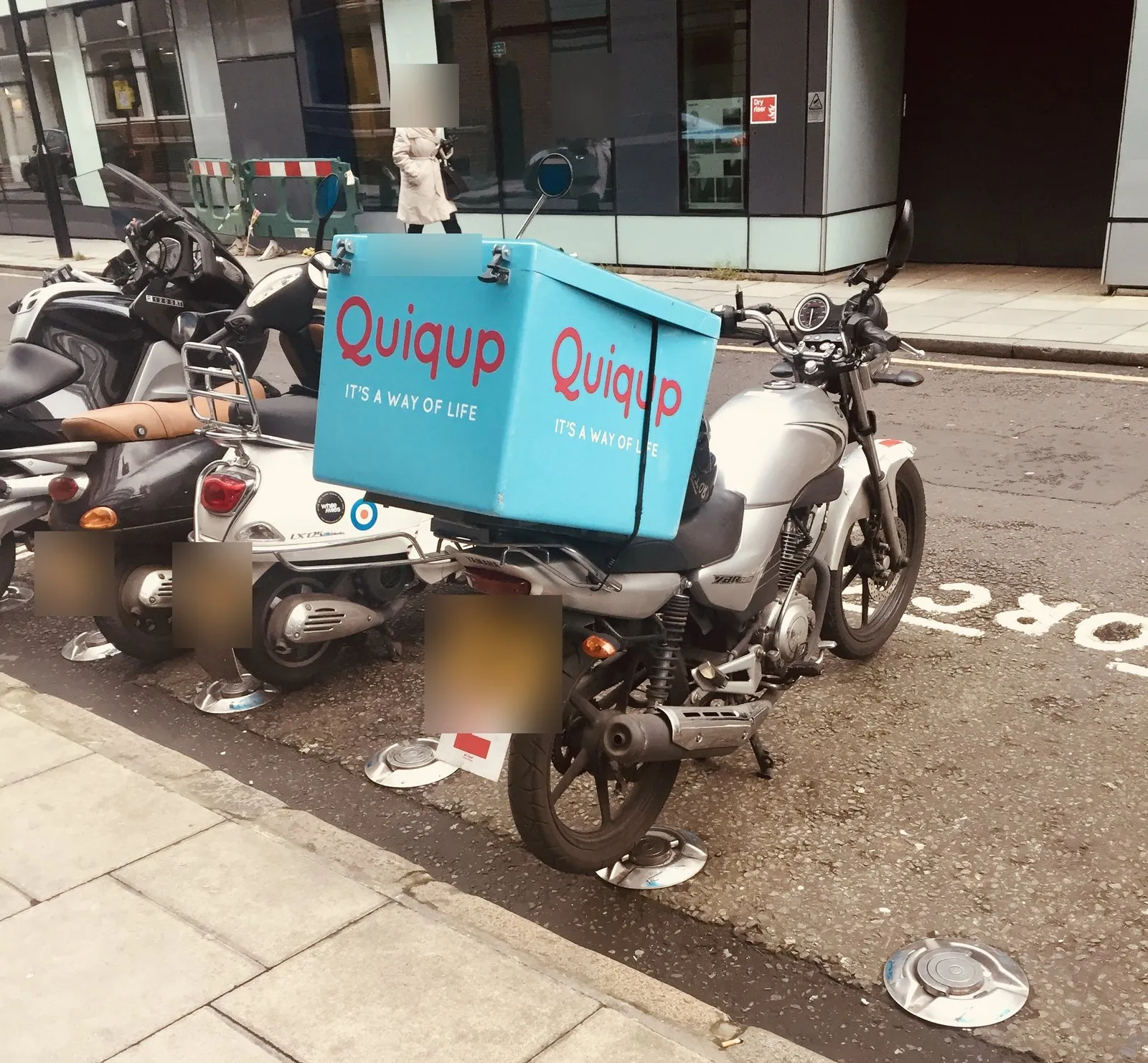
My own exit was quieter. In 2014 I gave up papping, bought a new bike and became a delivery driver for Quiqup, the London on demand delivery service that launched that September (TechCrunch). My photography years ended there. The journalist John Pilger told an interviewer in 2014 to "always look for the truth from the ground up, rarely from the top down", and added: "Real journalists are agents of people" (Southeast Asia Globe). In my view, at its best, the pavement was the ground up.
Where we are now
Today almost everyone carries a camera, famous people publish their own lives, and pictures move through social media before a picture desk has time to react. The appetite for candid moments has not gone. The means of making and selling them has changed, and much of the old pavement knowledge has gone with it.
What is left is the archive. Backgrid, which licenses my pictures, became part of Shutterstock in February 2024, bringing more than 30 million celebrity and entertainment images into one editorial library (Shutterstock). The nights themselves are now period pieces, and they are turning up on screen. In 2024 I appeared as a supporting artist playing a royal photographer in A Very Royal Scandal on Prime Video. In May 2026 Deadline and Variety reported that HBO and A24 were developing an Angel Heart series, with Zac Efron attached to star as a New York paparazzo (Deadline; Variety).
For anyone making a film, a documentary or a book about the 2000s, about Britpop's afterglow, the Beckham years, the young royals, Amy Winehouse or the end of Fleet Street, these frames are primary evidence of how it looked from the kerb.
My photography years ran from 1999 to 2014, and that archive is now licensed through Backgrid UK.
License the archive
Picture desks and researchers can license any frame on this site through Backgrid UK Sales at backgrid_uksales@shutterstock.com. It helps to include a link to the picture or essay, the Backgrid set ID if there is one (it starts BGUK_), where it will appear, the territory and the dates. See licensing and credit, or browse the archive.
For documentaries, films, books, exhibitions and archive research, including searches of the wider 1999 to 2014 archive for a particular person, venue or night, email me directly at pictures@charliepycraft.co.uk.
For communications advice, briefing documents or help turning a complex story into a short, accurate account for the media, see work with me.